
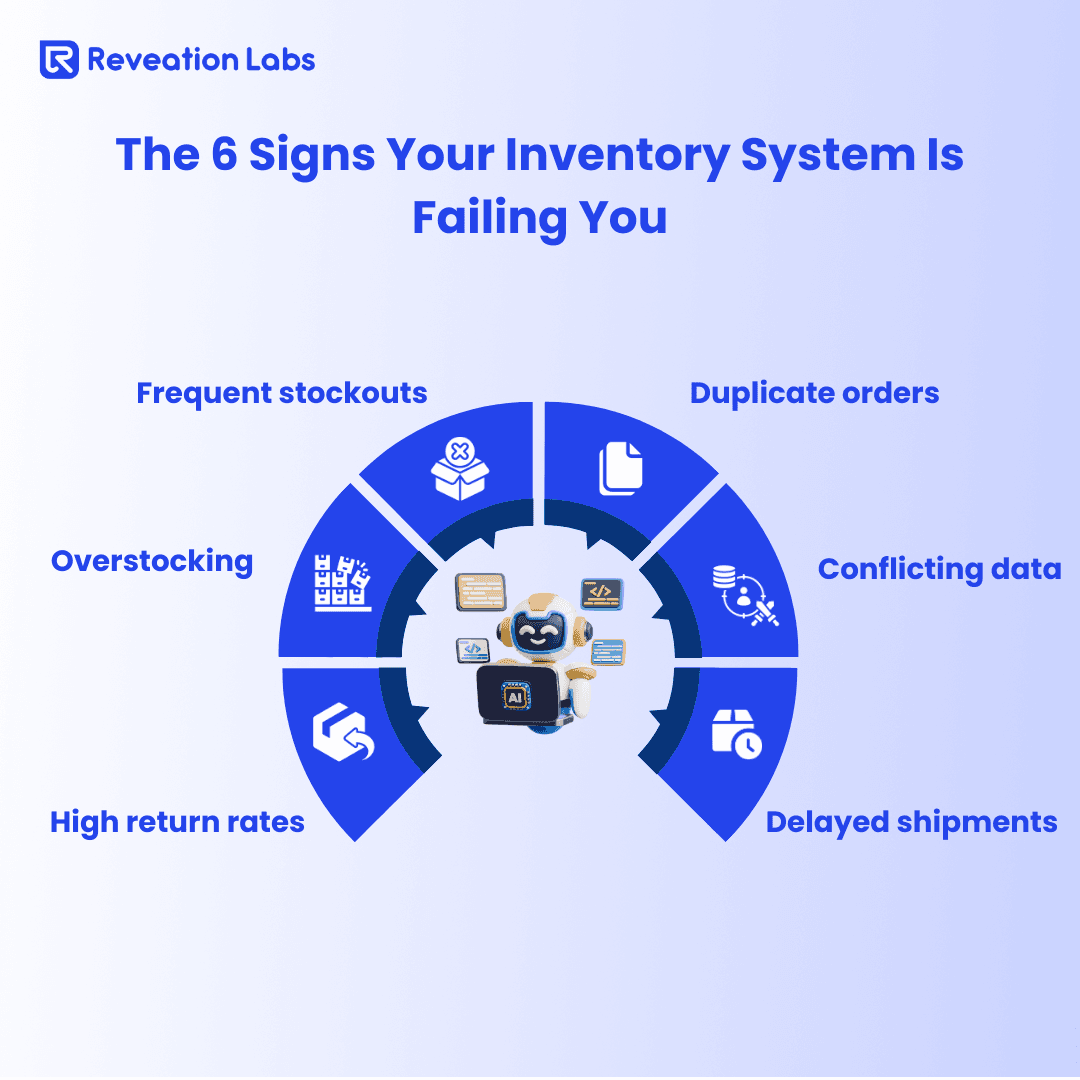
When buyers cannot trust availability, conversion drops, support load rises, and teams fall back to manual work. This guide breaks down the six most common failure points and how distributors fix them in a way that scales.
What breaks trust fast
- Stock messages that do not match reality
- Conflicting numbers across systems
- Surprises at checkout after a buyer commits time
What you will improve
- Real inventory signals buyers can trust
- Integrations you can operate and monitor
- Fewer exceptions and fewer escalations
Have you ever had a customer use your site search for a product, find it fast, and then discover it is out of stock at their location? Or watched a buyer abandon checkout because they could not trust the inventory message?
Now zoom out. What if warehouse teams are updating spreadsheets while sales quotes from a different system and customer service is stuck explaining delays. For many distributors, this is not an edge case. It is the daily operating reality when inventory visibility and integrations are not built to scale.
The trust gap
Recent B2B buyer research shows this problem is widespread. Buyers report high frustration when stock levels, pricing, and delivery timelines do not match reality, and many are willing to switch suppliers when the digital experience breaks trust.
Inventory visibility is not a nice-to-have. It is the backbone of reliable B2B ecommerce operations. This guide breaks down six common challenges distributors face and the practical fixes that make the biggest difference.
Why Is There An Issue?
B2B ecommerce is growing fast, and forecasts vary depending on what is included in the market definition. One widely cited estimate projects the market could reach $24.3 trillion by 2030. That growth is real, but it also raises the bar for execution.
The root issue is not lack of features. It is complexity. Distributors run multiple warehouses, multiple systems, and multiple buying processes. Keeping inventory, pricing, and fulfillment promises accurate across locations becomes difficult unless your data flows and system roles are clear.
The 6 Challenges and Fixes
- Challenge 1: Lack of real-time inventory data
- Challenge 2: Poor integration between systems
- Challenge 3: Complex multi-location order fulfillment
- Challenge 4: Communication gaps between teams
- Challenge 5: Limited product availability visibility for buyers
- Challenge 6: Reporting and forecasting inaccuracies
Challenge 1: Lack of Real-Time Inventory Data
What it looks like
Your inventory system shows 500 units. The warehouse count says 300. Sales quotes off what the online marketplace shows. A customer orders 450 units with next-day expectations. Then the scramble begins.
When inventory data is stale or inconsistent, every downstream step becomes risky. You get backorders, split shipments, cancellations, and customer escalations. On the other side, you can also overbuy because the data makes demand look different than it really is.
This is one of the most common challenges of B2B ecommerce. If inventory is not synchronized across locations, or if your catalog management is incomplete, you cannot make confident decisions about restocking, pricing, or fulfillment.
Practical fix
- Establish a trusted inventory source
- Publish availability consistently across channels
- Keep signals updated and explainable
Modern B2B ecommerce solutions help distributors design the right inventory signals for each channel so buyers see the most accurate message your operation can support.
Challenge 2: Poor Integration Between Systems
Your ERP system talks to warehouse tools. Your ecommerce platform keeps its own records. Payments run elsewhere. Sales works in CRM. If these systems are not integrated with clear ownership, data does not flow. It drifts.
That drift creates conflicting versions of truth. ERP says 1,000 units. Ecommerce shows 800. The warehouse says 950. Nobody trusts any number, so teams spend hours reconciling and fixing orders after the fact.
What “integration you can operate” means
- Defined system roles and data ownership
- Clean data contracts between systems
- Monitoring and alerting for failures
- Clear failure handling and recovery steps
A well designed approach connects your ERP, ecommerce platform, warehouse tools, and payment processing so teams spend time serving customers instead of chasing mismatched data.
Challenge 3: Complex Multi-Location Order Fulfillment
A customer on the West Coast places an order. Your East Coast warehouse has stock, and so does your central distribution center. Which one should ship it?
The right answer depends on your rules: delivery promises, shipping cost, warehouse workload, cut-off times, and available inventory. If your system cannot evaluate those tradeoffs, routing becomes manual and slow.
This challenge of B2B ecommerce gets harder as locations grow. With six, ten, or twenty warehouses, manual routing increases costs and increases the chance of shipping from the wrong place.
Practical fix
Distributed order management helps by applying consistent rules to inventory and proximity, then routing orders based on what your business values most. When routing is systematic, delivery becomes more predictable and teams spend less time firefighting.
Buyers notice the difference. Faster and more reliable fulfillment reduces the number of customers who place orders elsewhere after one poor experience.
Challenge 4: Communication Gaps Between Teams
Warehouse fulfills from one set of numbers. Procurement plans from a different forecast. Sales quotes from another system. When teams operate in silos, even good people make expensive mistakes.
The outcomes are familiar: duplicated orders, missed priorities, rush shipments, and delayed standard orders. The customer sees the effect as inconsistency and broken promises.
Practical fix
Centralized dashboards and shared definitions fix a lot of this quickly. When everyone sees the same real-time signals, communication improves. Sales sees what inventory actually supports, warehouse sees what was promised, and procurement sees demand patterns instead of guesses. Alerts can route issues to the right owners before they become escalations.
Challenge 5: Limited Product Availability Visibility for Buyers
A buyer adds an item to their cart, reaches checkout, and discovers it is out of stock. They do not just abandon the cart. They question whether they can trust your site at all.
This happens when the buyer-facing site is not aligned with real availability. It could be a delay in syncing, a wrong warehouse assignment, or inventory logic that does not match how orders are fulfilled. Either way, the experience breaks.
This challenge has direct financial impact. Using an effective search bar improves site navigation and helps customers find products faster, but discovery alone is not enough. Buyers also need availability they can trust, or conversion drops and relationships weaken.
B2B payment confidence suffers too. Buyers hesitate to commit when they are unsure the order will ship as promised, especially when approvals and terms are involved.
Practical fix
Publish availability signals that are accurate and explainable. Buyers do not need perfection, but they do need consistency. When your website pulls the right inventory view for the buyer, surprises at checkout drop and trust improves.
Challenge 6: Reporting and Forecasting Inaccuracies
Forecasting matters because inventory ties up cash. When forecasting is off, you either run out of fast-moving items or sit on slow-moving stock that drains working capital.
Accurate forecasting is hard when data is scattered. Sales tracks orders one way, warehouse tracks shipments another way, and accounting closes the month with a different view. When the inputs do not match, forecasts become guesswork.
This fragmented data is one of the biggest challenges of B2B ecommerce. Purchasing decisions get made with incomplete information, and the business pays for it through stockouts, overstocks, and reactive buying.
Why this hits cash flow
Poor forecasting also affects cash flow. You cannot plan restocking needs confidently, and surprises show up at the worst times.
Practical fix
Build unified reporting you can trust. When operational data is aligned across systems, analytics can reveal real demand patterns, seasonal shifts, and customer behavior. Better inputs lead to better decisions, and that keeps inventory healthier without overcommitting cash.
Also Read: Shopify Plus B2B eCommerce for Distributors & Manufacturers
The Real Impact On Your B2B Payment Process
Inventory accuracy and payments are connected. When inventory is wrong, orders get delayed or cancelled, refunds and adjustments increase, and cash flow becomes harder to predict. Buyers also become hesitant to approve terms or repeat purchases if fulfillment feels unreliable.
When inventory signals are trustworthy and fulfillment is predictable, payments become smoother. Buyers approve terms more confidently, reorder more reliably, and support teams spend less time resolving avoidable disputes.
Working with a specialized B2B eCommerce consulting team helps distributors tackle these challenges with clear system roles, practical integration plans, and data-driven prioritization.
How Modern Solutions Address All Six Challenges
You do not have to solve these challenges alone. Platforms like Reveation Labs are built to address B2B ecommerce complexity at scale when implemented with the right operating model.
What modernization typically includes
- Consistent inventory synchronization across locations
- Integrations that reduce manual reconciliation
- Order routing rules that match business priorities
- Buyer experiences that reflect real availability
- Analytics that forecast demand and catch issues early
- Processes that keep teams aligned on promises and delivery
Read Also: B2B eCommerce for Manufacturers
The Future of B2B Ecommerce
The challenges of B2B ecommerce are not going away. Buyer expectations keep rising, catalogs keep growing, and supply chains keep changing. The distributors that win will be the ones that make inventory visibility and integration reliability non-negotiable.
The encouraging part is that the fixes are known and achievable. When you improve inventory accuracy, connect systems properly, and route orders with consistent rules, you reduce operational drag and protect customer trust.
What happens if you do nothing
If you ignore these challenges, you are forced to compete on price while absorbing the cost of errors and exceptions. If you solve them, you become the supplier buyers return to because ordering feels reliable.
Invest in the fundamentals now. Implement B2B ecommerce solutions that support visibility, integration, and clean analytics so the experience you sell matches what operations can deliver.