
The B2B Ecommerce Problem
Why do B2B buyers still deal with 1990s-style workflows when they expect Amazon-like experiences?
The problem is simple: Complex quotes take days. Multiple stakeholders need approval. Custom pricing requires back-and-forth emails. By the time you send the proposal, the deal is dead.
Here's what's changing that: Agentic AI.
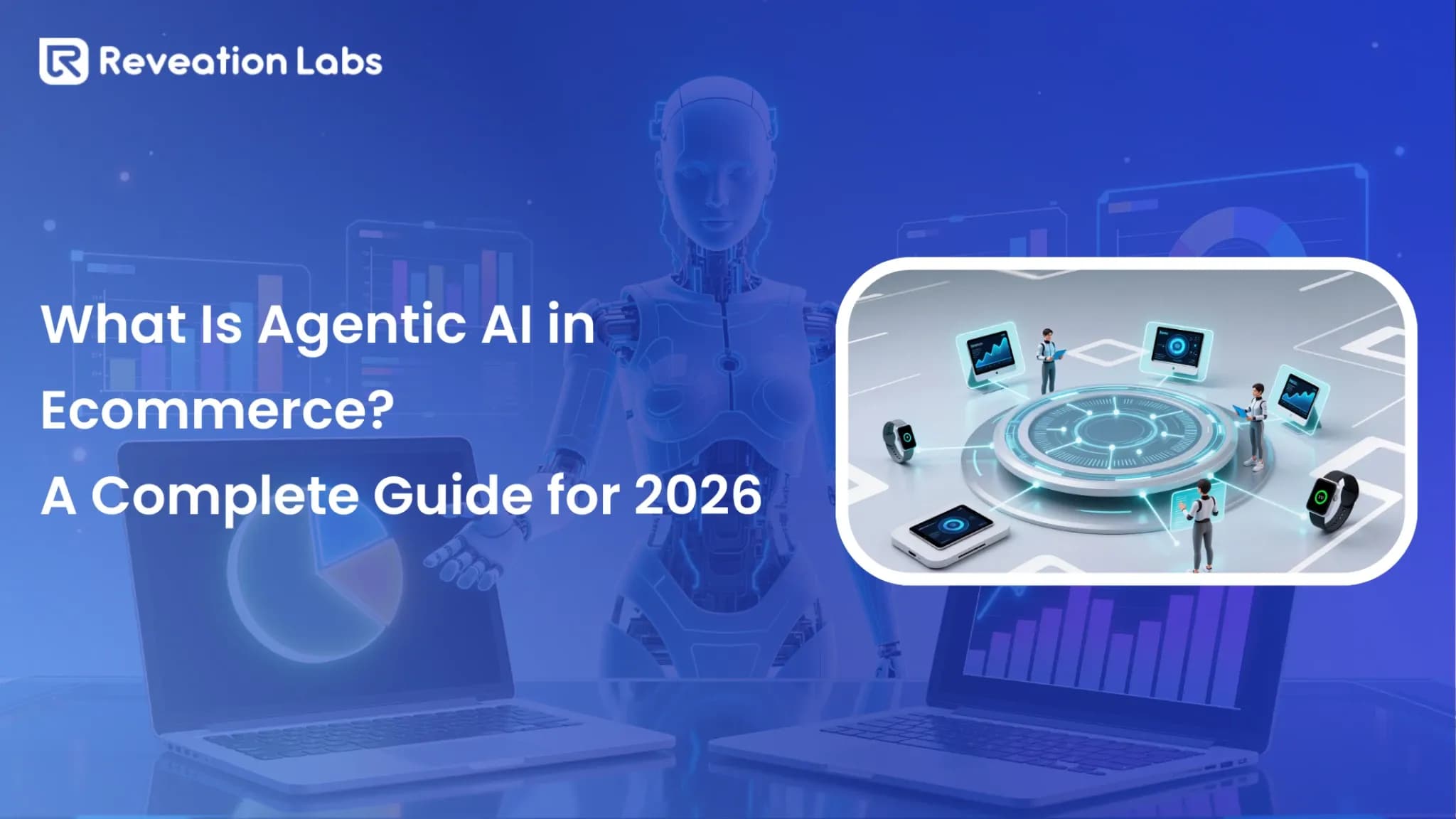
This isn't another chatbot. Agentic AI doesn't just answer questions. It takes action on its own. It negotiates. It solves problems. It executes tasks without waiting for human input.
2026 is the tipping point: Large language models, API integrations, and real-time data are finally working together. B2B eCommerce is shifting from reactive to proactive.
How Agentic AI Differs from Regular Automation
The Old Way: Rule-Based Automation
Traditional automation runs on if/then logic. It follows triggers and scheduled tasks. When something unexpected happens, it stops and waits for a human.
Example: "Send abandoned cart email after 24 hours."
The New Way: Autonomous Agents
Agentic AI automation perceives context. It reasons through problems. It adapts based on what it learns.
Example: An AI agent detects cart abandonment, analyzes the buyer's procurement cycle, reaches out to 3 stakeholders with personalized pricing, schedules a demo, and generates a contract. No human involvement needed.
The 2026 Tech Stack
Key Capabilities
- Autonomous decision-making
- Multi-step reasoning
- Tool use (APIs, databases, workflows)
- Memory across sessions
- Continuous learning
In 2025, Google launched Gemini 3, specifically designed for building AI agents. IBM open-sourced BeeAI, a framework that already has over 3,000 GitHub stars.
4 Game-Changing Use Cases for B2B Ecommerce
1. Autonomous Sales Agents
What do they actually do? They qualify leads, nurture prospects, generate custom quotes, and negotiate pricing.
Real impact: These agents handle 40-60% of early-stage sales conversations.
Here's how it works:
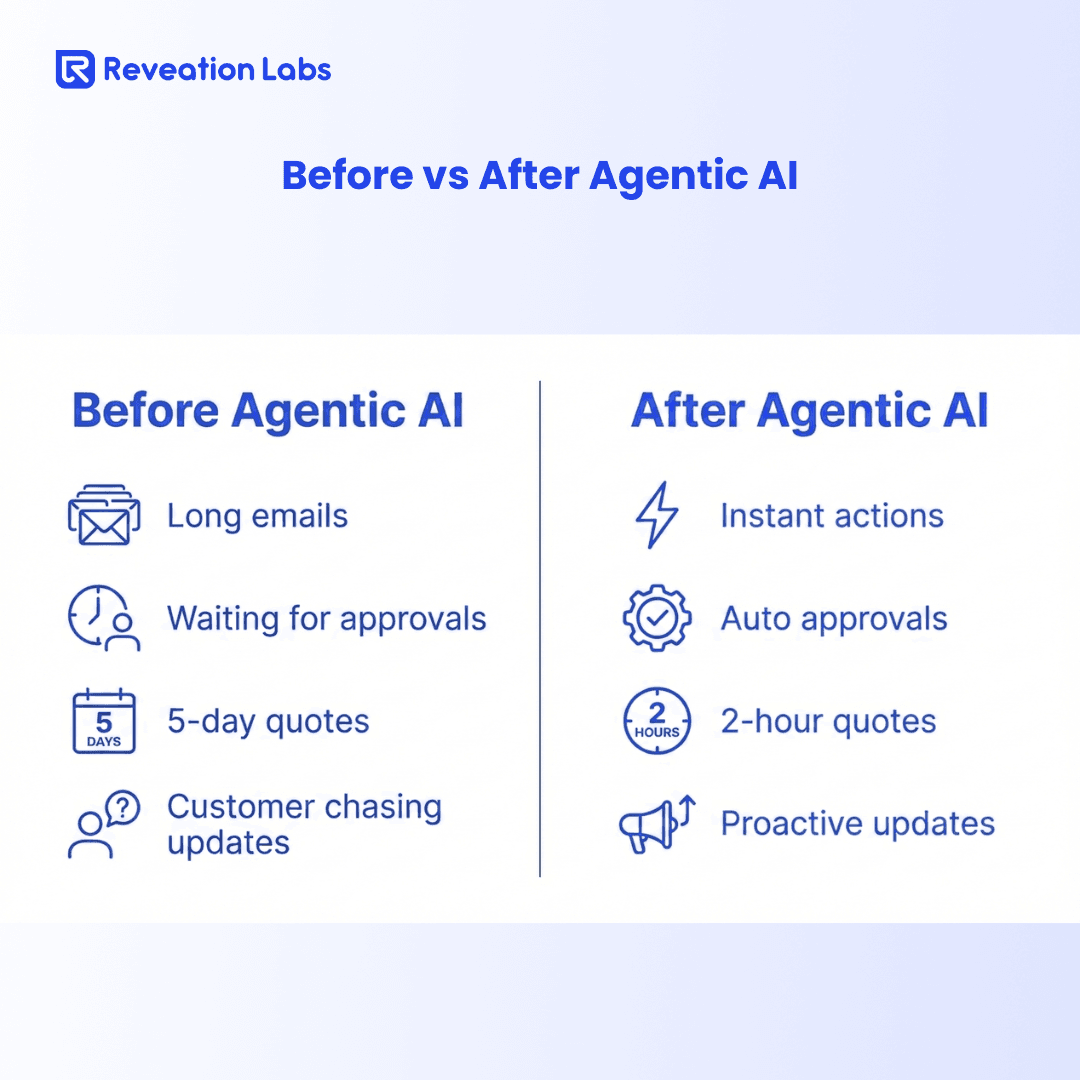
A manufacturing buyer requests a custom bulk order. The agent checks inventory across 3 warehouses, calculates volume discounts, coordinates delivery windows, and generates a proposal in 2 hours. The manual process: 5 days.
But it goes deeper than speed:
- Memory: Remembers past interactions and typical order patterns
- Prediction: Forecasts reorder needs before customers realize it
- Objection handling: Price too high? Auto-applies relevant discounts based on volume and history
- Problem solving: Delivery timeline doesn't work? Finds alternative shipping routes or warehouse locations
2. Intelligent Procurement Agents
These autonomous AI agents predict when you'll need to reorder. They negotiate with multiple suppliers. They manage contracts automatically.
Real impact: Procurement cycles drop from 21 days to 3 days.
The process looks like this: AI detects an upcoming stockout based on sales velocity. It requests quotes from approved suppliers on its own.
It negotiates terms. It only routes for approval if something falls outside the rules.
The cost savings add up fast:
- Compare prices across multiple suppliers in real-time
- Factor in shipping costs, lead times, and supplier reliability scores
- Negotiate better terms by processing data faster than human teams
- Complete contract renewals automatically within pre-set parameters
What's trending in 2026? AI-to-AI negotiations between buyer agents and seller agents.
According to predictions from 50+ experts, agent-to-agent orchestration is one of the major innovation disruptors this year.
Two AI agents can complete negotiations in minutes that would take humans days of email exchanges.
3. Proactive Customer Success Agents
These agents monitor order status 24/7. They resolve issues before customers even notice them. They manage returns and replacements.
Real impact: 50-70% ticket deflection with round-the-clock availability.
Example scenario: An agent detects a shipment delay. It proactively notifies the customer. It offers an expedited alternative from a nearby warehouse. It updates the ERP and sends new tracking info. Everything happens automatically.
4. Dynamic Pricing and RFP Response Agents
These agents adjust pricing in real-time. They respond to RFPs automatically. They generate contracts on demand.
Real impact: 10x faster quote turnaround and 15-25% conversion lift.
What happens when a competitor drops their price? The agent adjusts your pricing strategy within set guardrails. It sends updated proposals to prospects in your pipeline immediately.
Why does this matter for B2B? Because B2B pricing is complex:
- Volume tiers that change by customer segment
- Regional variations across different markets
- Account-specific contracts with custom terms
- Seasonal promotions and bulk discounts
- Multi-year agreement calculations
Humans can't manage this at scale; AI agents can.
2025-2026 Trends B2B Leaders Must Watch
Trend #1: Multi-Agent Ecosystems
Single agents create a productivity trap. That's why companies are moving to multi-agent teams.
Sales agent + procurement agent + logistics agent working together creates collaborative intelligence. In 2025, AWS launched an AI agent marketplace with over 900 pre-built agents. Google, Microsoft, and Salesforce followed with their own marketplaces.
Results from multi-agent systems:
Trend #2: Vertical-Specific Solutions
Generic AI fails in B2B complexity. That's why industry-specific agents are taking over.
These agents are trained on actual workflows from manufacturing, healthcare, and food service industries. They understand your specific business rules.
Trend #3: Compliance and Governance Agents
Do you need automated regulatory compliance? These agents handle it.
This is critical for healthcare, pharma, and financial services B2B. The EU AI Act is pushing businesses to add transparency and human oversight to their agent systems.
Deloitte's December 2025 report warns that many agentic AI projects are failing without proper governance.
Trend #4: Voice and Multimodal Commerce
What's the next interface beyond chat?
Warehouse managers are reordering via voice. Image recognition handles product matching and quality control. This is already happening in 2026.
The Bottom Line
First-movers in 2026 gain an 18-24-month competitive advantage. After that, agentic AI becomes table stakes.
IBM and Salesforce predict that one billion AI agents will be operational globally by the end of 2026.
Getting Started: Your Path to Agentic AI
Should you build from scratch?
No. Most B2B companies lack AI expertise and infrastructure. Focus on your core business. Partner with specialists instead.
What Reveation Labs Does Differently
Discovery: We map your buyer journey and identify high-impact use cases.
Custom Agent Design: Built for your business model, not one-size-fits-all templates.
Rapid Deployment: MVP in 8-12 weeks with measurable ROI.
Continuous Optimization: Agents learn and improve over time.
Typical ROI
- 50-60% reduction in order processing time
- 40-50% support ticket deflection
- 15-25% conversion rate lift
- 300% ROI in Year 1
These are real numbers from early adopters.
Start Small, Scale Fast: Begin with one agent, usually sales or procurement. Prove value quickly. Then expand to multi-agent orchestration.
The Competitive Advantage Starts Now
Your B2B competitors are either exploring this now or falling behind. There's no middle ground.
2026 is still early enough to be a leader, not a follower. But the window is closing.
Stop guessing what agentic AI could do for your business. Let's map it out.
Ready to see how agentic AI can transform your B2B ecommerce?
Get a free Agentic AI in B2B eCommerce Assessment from Reveation Labs:
- 30-minute strategy session
- Custom use case identification for your industry
- ROI projection specific to your business model
We don't just build AI. We create competitive advantages.