Are traditional B2B buying cycles officially dead? What are the latest trends in the commerce industry that will actually move the revenue needle this year? Why is "B2B ecommerce" suddenly everyone's favorite topic at board meetings?
As we enter the final quarter of 2025, business leaders are asking these exact questions.
With less than 100 days left in the year, companies are scrambling to understand which ecommerce trends 2025 will shape their B2B success in 2026 and beyond. The answers might surprise you.
2025 At a Glance: What's Changed in B2B Commerce
This year has brought massive shifts in how businesses buy and sell to each other.
According to DynamicWeb's latest report, 85% of B2B organizations now have ecommerce storefronts or self-service portals, with 66% increasing their investment in customer portals.
Even more striking, 80% of B2B buyers are using mobile devices at various stages of their purchasing journey.
The numbers tell a clear story. B2B companies expect more than half their revenue to come from digital channels over the next two years, a massive jump from just 30% last year.
This isn't just a trend; it's a complete transformation shaping the future of ecommerce and how business gets done.
Hyper-Personalized B2B Experiences
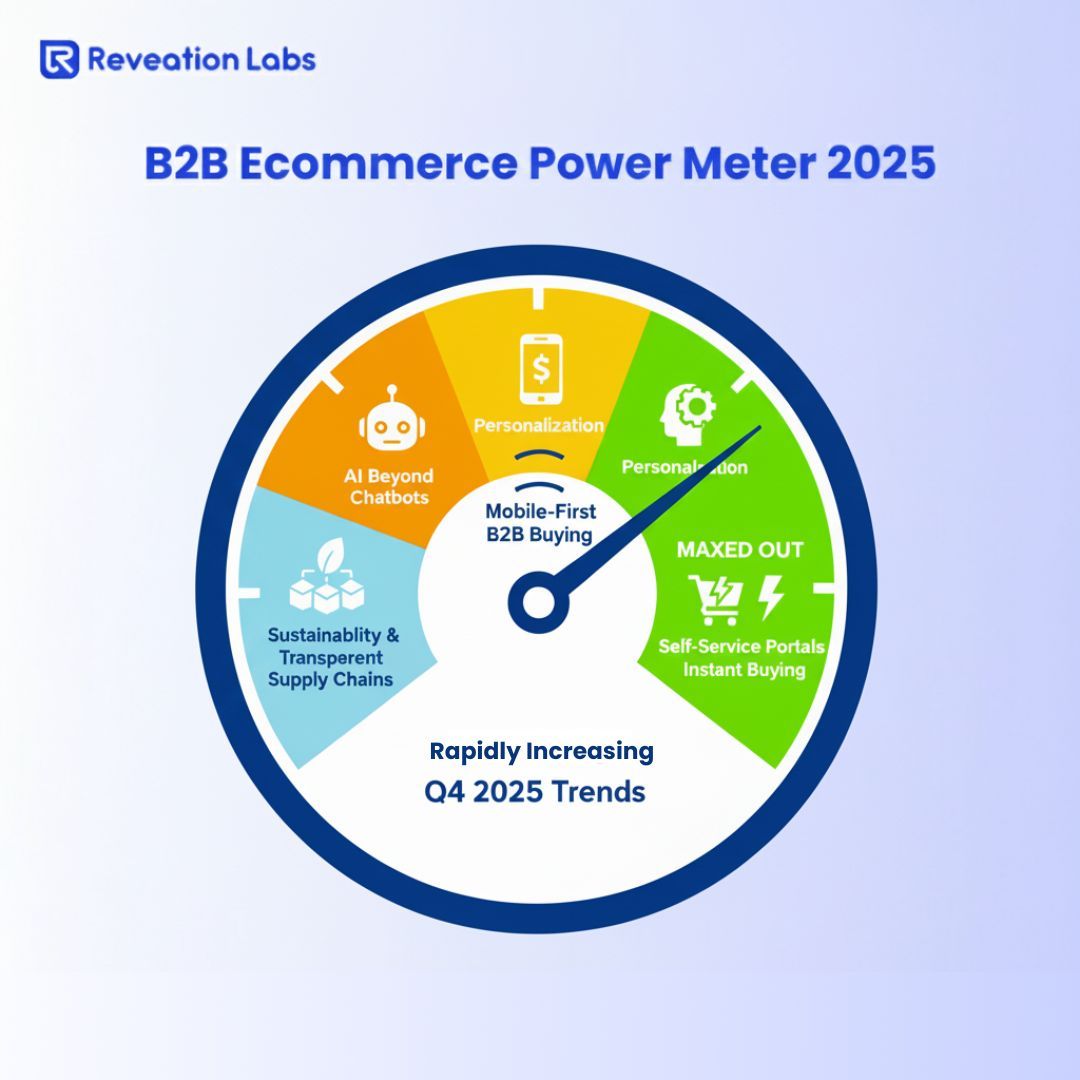
The first major trend reshaping commerce is B2B ecommerce personalization. Gone are the days when showing the same catalog to every customer was acceptable.
Today’s B2B buyers expect AI-powered recommendations just like they get on their favorite consumer shopping apps.
Companies are using tools like dynamic pricing and tailored product bundles to make buying feel personal for each customer.
For example, manufacturers are increasing sales by using AI to look at past purchases, seasonal trends, and industry needs to suggest the right products and services.
This personalization works because AI can process large amounts of customer data in real time. It analyzes browsing habits, purchase timing, and other behavior to create targeted experiences that drive more orders and higher average sales.
Self-Service Portals and Instant Buying
B2B ecommerce self-service has become the gold standard for modern business relationships. Buyers no longer want to wait for sales representatives or navigate complex approval processes for routine purchases. They want Amazon-like convenience, even when buying industrial equipment or professional services.
Self-service portals now offer real-time inventory checks, instant pricing, and 24/7 digital storefronts that never close. According to recent data, buyers who get superior B2B mobile commerce experiences are 90% more likely to buy again from the same vendor.
This has led to platforms like SAP and Shopify Plus investing heavily in self-service capabilities that reduce friction and speed up the buying process.
The impact goes beyond convenience. Self-service portals reduce sales costs and accelerate purchase cycles, allowing companies to handle more transactions with fewer resources while improving customer satisfaction.
Also Read: B2B eCommerce for Manufacturers
The B2B Payments Revolution
B2B ecommerce payments are undergoing their biggest transformation in decades. Buy Now Pay Later (BNPL) solutions, once exclusive to consumer purchases, are now reshaping how businesses manage cash flow and procurement.
The B2B Buy Now, Pay Later (BNPL) market is expected to reach $250 billion globally by 2025, showing a big shift in how businesses handle payments.
These solutions let companies offer digital financing right at the point of purchase, helping bridge the gap between paying suppliers and receiving money from customers.
Modern B2B payment systems include options like embedded finance, automated invoice processing, and flexible working capital solutions.
Companies can offer payment terms from 30 days up to 12 months, so buyers can pay on their own schedule while sellers get paid upfront by the BNPL provider.
AI Goes Beyond Chatbots
AI in B2B ecommerce has evolved far beyond simple customer service bots. Today's AI systems handle complex tasks like sales forecasting, contract review, and fraud detection with remarkable accuracy.
Tools like Salesforce Einstein, Clari, and Gong.io are changing the way sales teams manage pipelines and predict revenue. They use machine learning to look at past data, customer interactions, and market trends to give accurate forecasts and spot deals that might be at risk before they fall through.
The impact is measurable. High-performing sales teams are 10.5 times more likely than underperforming teams to experience major positive impacts on forecast accuracy with AI tools. These systems don't just crunch numbers; they provide actionable insights that help sales teams prioritize leads, optimize pricing, and close deals faster.
Mobile-First B2B Buying Takes Center Stage
B2B ecommerce mobile apps are changing the way businesses buy and sell. Since the pandemic, mobile app orders have gone up by 250 percent, and 71 percent of B2B buyers now want an easier mobile shopping experience.
Field sales teams are using WhatsApp, mobile apps, and tablets to close deals on the go. Distributors say transactions are getting done about 20 percent faster, and buyers like being able to research products, compare prices, and place orders from anywhere.
Companies like Fastenal have found great success with mobile apps that include features like barcode scanning and voice search. Customers can find and order products quickly, which keeps them happy and coming back.
Sustainability and Transparent Supply Chains
Sustainability in B2B ecommerce is no longer optional. Buyers are paying more attention to environmental responsibility and expect suppliers to do the same.
Procurement teams now look for carbon tracking, eco-friendly products, and clear supply chain information before making a purchase.
New regulations in the EU and India are also pushing companies to include sustainability metrics in their e-commerce platforms. This means tracking carbon footprints, checking where materials come from, and sharing environmental impact information alongside product details.
Beyond following the rules, sustainability has become a way to stand out. Buyers are choosing suppliers who can show they care about the environment, making eco-friendly practices a real competitive advantage.
Headless Commerce and Modular Platforms
Headless B2B ecommerce is helping companies create custom shopping experiences without having to rebuild their whole system. It separates the frontend (what customers see) from the backend (where data and processes run), so businesses can innovate faster and sell across multiple channels.
Salesforce research shows that 46 percent of IT teams have already implemented headless architecture, and 43 percent plan to do so soon. This approach solves a common challenge: businesses need speed, flexibility, and customization to stay competitive.
With headless platforms, B2B companies can launch new channels in weeks instead of months, customize checkout for complex B2B needs, and connect with existing ERP and CRM systems without major disruptions. The result is smoother customer experiences and more agile operations.
Emerging technologies like AI-driven personalization and automation are reshaping how B2B eCommerce solutions deliver value, efficiency, and measurable growth for enterprises.
From CPQ to B2B Marketplace Growth
B2B ecommerce marketplace growth, reflecting the internet marketplace platforms trends 2025, is being fueled by sophisticated Configure Price Quote (CPQ) tools that make complex selling scalable. The CPQ market is projected to surge from $2.2 billion in 2022 to $7.3 billion by 2030, enabling businesses to automate pricing, configure complex products, and generate accurate quotes instantly.
These tools are particularly valuable for manufacturers and distributors dealing with thousands of product variations, custom configurations, and complex pricing rules. Modern CPQ solutions integrate AI to suggest optimal configurations and predict customer preferences, making the selling process faster and more accurate.
The integration of CPQ with marketplace platforms is creating new opportunities for B2B companies to reach customers through multiple channels while maintaining consistent pricing and configuration rules.
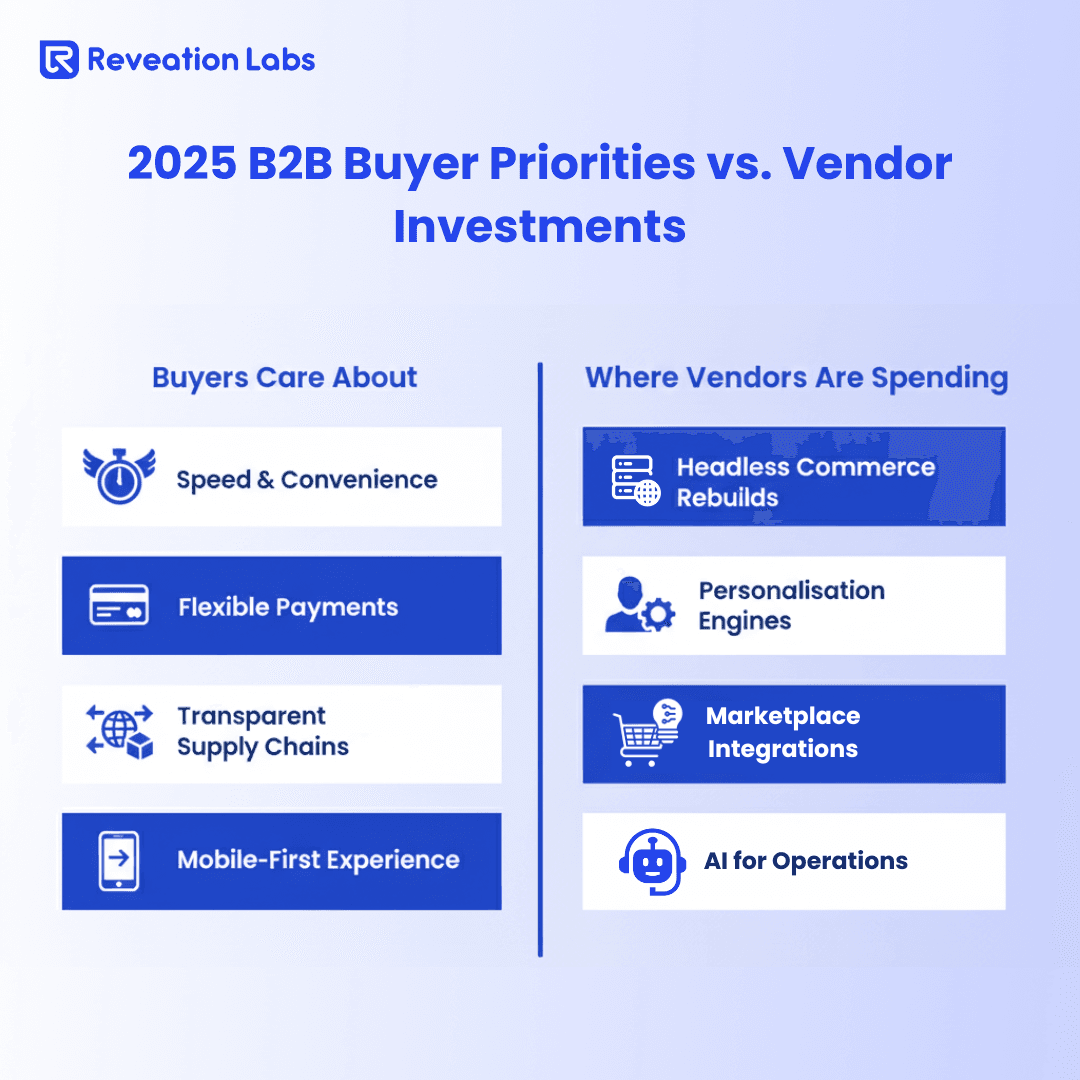
Steps to Stay Ahead in B2B E-commerce
Based on the latest B2B ecommerce trends, here are five practical actions businesses can take today:
- Audit your mobile experience – With 80% of buyers using mobile devices, make sure your site works seamlessly on smartphones and tablets.
- Implement self-service capabilities – Let customers access real-time pricing, inventory, and ordering without needing a sales rep.
- Offer flexible payment options – Consider solutions like Buy Now, Pay Later to reduce cash flow barriers for your customers.
- Invest in AI-powered tools – Start with sales forecasting or customer segmentation to see immediate benefits.
- Plan for headless architecture – Evaluate decoupling your frontend and backend to increase flexibility and scalability.
The most successful companies in 2026 will be those that invest in technology to enhance customer experience while making their own operations more efficient.
To stay ahead of these emerging trends, businesses are increasingly turning to B2B eCommerce consulting for guidance on technology adoption, platform optimization, and long-term growth strategies
Looking Forward: What's Next
B2B ecommerce trends are changing how businesses operate and what customers expect, shaping the very future of b2b ecommerce. Mobile technology, AI, flexible payments, and sustainable practices are creating new ways to stand out. The question isn’t if these trends will continue; it’s how quickly your business can adapt.
Reveation Labs helps businesses implement these trends effectively. From integrating AI-driven tools and mobile-friendly solutions to setting up flexible payment systems and sustainable practices, we guide companies step by step so they can stay competitive and future-ready.
B2B commerce is becoming digital, mobile, intelligent, and customer-focused. Will you lead the change or follow it.