
Manufacturers and distributors today face intense pressure to modernize their sales channels. Business buyers increasingly expect the convenience of self-service, just as they do in the B2C world.
In fact, by 2025, over 70% of B2B decision-makers will be millennials, a generation raised on seamless digital experiences. Relying solely on traditional phone or email orders is already costing companies revenue and customer loyalty. This is where B2B portals play a role, as these online platforms allow customers to place orders, access information, and manage their accounts without direct sales support.
Modern B2B buyers are even willing to make huge purchases through digital self-service channels. As the chart above shows, 77% of B2B buyers would spend $50,000 or more in a single online transaction, and 35% would spend $500,000 or more, according to a 2021 survey.
This trend reveals that self-service portals aren’t just for small orders – buyers trust them for big-ticket purchases, too. As a result, companies that launch robust portals often experience rapid customer adoption. One manufacturer, for instance, reported that roughly 150 out of 200 weekly orders moved to their new self-service site soon after launch – a shift their CIO hailed as “phenomenal”.
Investing in a self-service portal is a significant undertaking, so it’s natural to ask: What’s the return on investment (ROI)? Calculating ROI means looking beyond just new sales; it includes operational savings and intangible benefits like customer satisfaction.
With the right strategy, an ecommerce portal focused on self-service can deliver tangible returns for manufacturers and distributors through both increased revenue and reduced costs. Let’s explore how these portals drive ROI and what you can do to maximize it.
Key ROI Benefits of Self-Service Portals
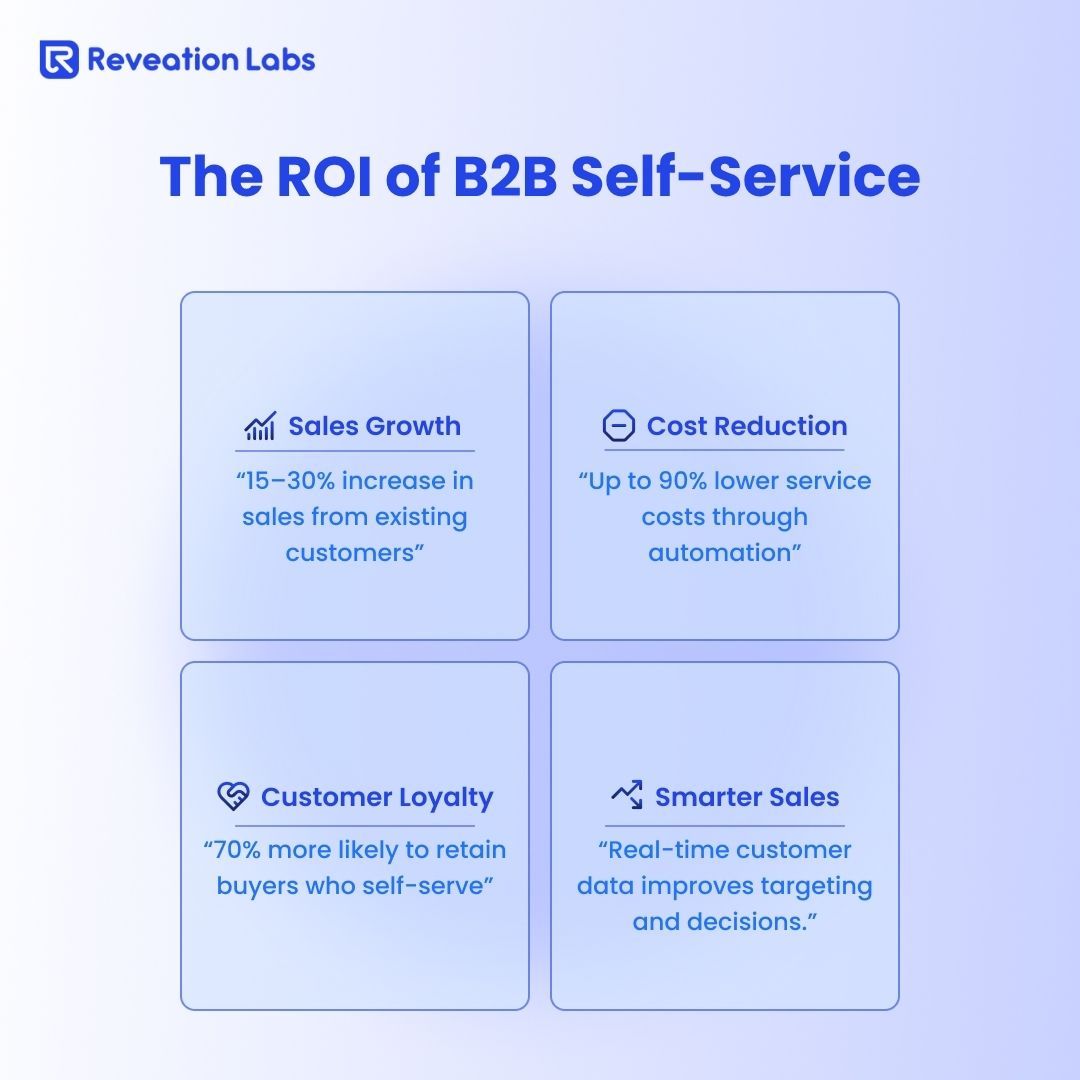
Self-service portals generate ROI by driving new revenue opportunities while simultaneously cutting costs. They effectively make it easier for customers to do business with you and cheaper for you to serve those customers. Here are some of the most impactful ROI benefits:
Revenue Growth
- A well-implemented B2B online ordering portal can boost sales from existing customers. Organizations often see a 15–30% increase in revenue from current accounts after introducing such self-service eCommerce capabilities.
- Customers tend to order more when the process is frictionless and available 24/7, and features like personalized recommendations can drive higher average order values.
Expanded Market Reach
Going digital breaks geographic barriers. A portal gives manufacturers and distributors a 24/7 global storefront, allowing them to reach new markets and customer segments without the need for a physical presence. This expanded reach translates into additional sales channels and higher overall revenue.
Lower Cost-to-Serve
- Every order placed through a portal is one less phone call or email your staff needs to handle. Automating routine order processing and customer inquiries significantly cuts operational costs.
- In fact, moving from manual processes to online self-service can reduce transaction costs by up to 90%, freeing up employees for more value-added tasks.
- For example, Oregon Tool saw that many routine phone and email orders simply disappeared as customers happily shifted to their new procurement portal software, relieving their customer service team of repetitive inquiries.
Customer Satisfaction & Loyalty
- Self-service portals improve the buying experience by providing speed and transparency. Satisfied customers are more likely to become repeat buyers, boosting their lifetime value.
- Research shows B2B buyers are 70% more likely to continue as customers with vendors who offer convenient digital purchasing options. Higher retention means more revenue over time, improving ROI.
Efficiency and Accuracy
- Allowing customers to input orders and access information directly reduces errors and delays.
- Real-time data on inventory, pricing, and order status means fewer fulfillment mistakes and less time spent correcting orders.
- These efficiency gains lower the cost per transaction and accelerate the sales cycle, contributing directly to ROI.
Data-Driven Sales
- Every interaction on the portal generates valuable data, from frequently viewed products to buying patterns. Manufacturers and distributors can leverage these insights to optimize their offerings and marketing.
- For example, seeing which products are trending or which items are commonly bought together enables smarter upselling and cross-selling strategies. This data-driven approach leads to incremental revenue that might have been missed in traditional channels.
For manufacturers working through dealer networks, these benefits strengthen partnerships by streamlining reorders and reducing manual paperwork through robust supplier portal software.
Distributors, often managing large catalogs and repeat orders, find that portals handle volume and complexity with ease, freeing sales teams to focus on high-value clients instead of routine tasks.
Together, the combined revenue gains and cost savings mean a self-service portal investment often pays for itself within a year or two, then continues to deliver returns.
Strategies to Maximize ROI from Your Portal
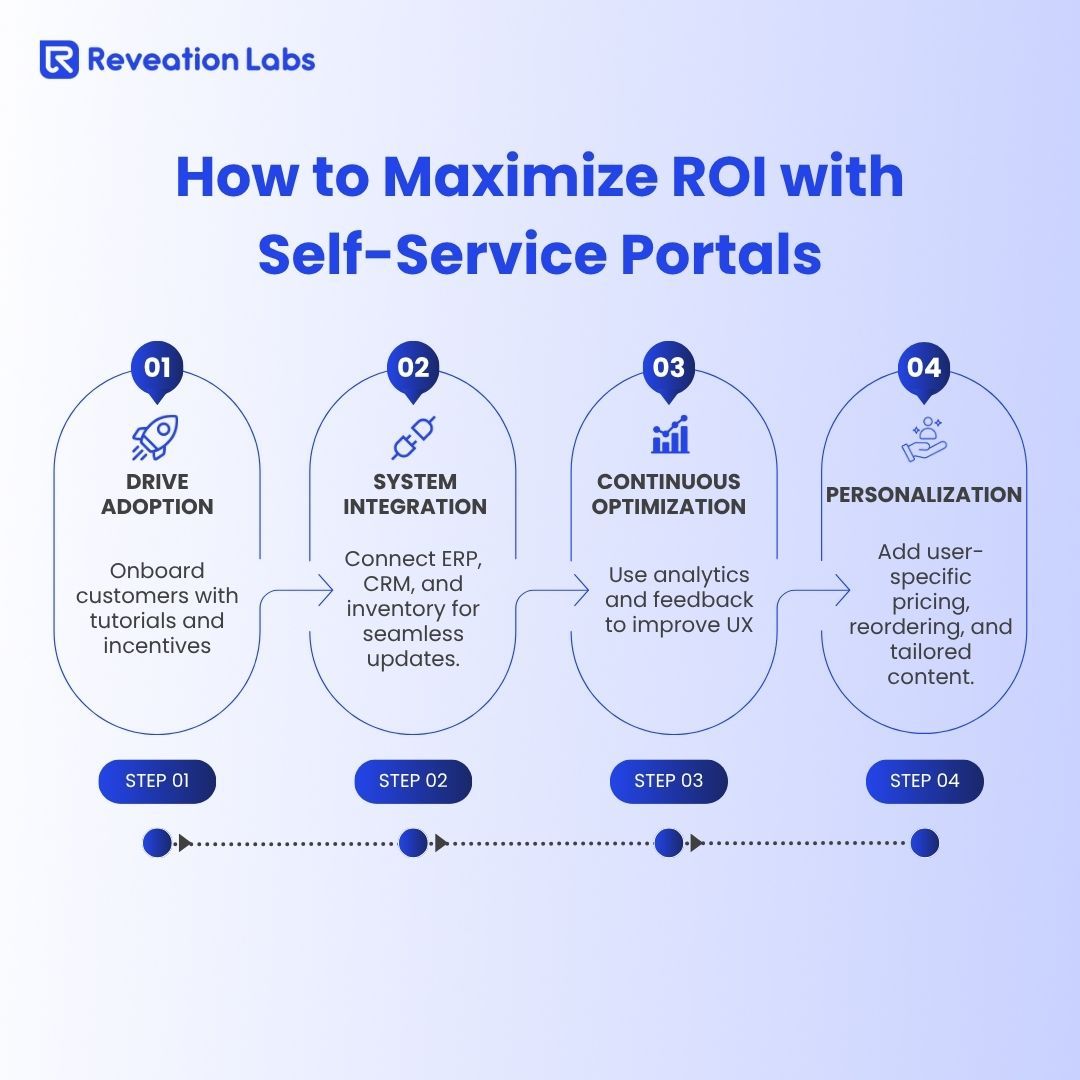
Simply launching an e commerce web portal for self-service doesn’t guarantee success – you need the right tactics to fully realize its ROI potential. Manufacturers and distributors should focus on the following strategies to drive stronger returns from their B2B portal initiative:
- Drive User Adoption: Ensure your customers know about the portal and how to use it. Offer onboarding, tutorials, and incentives for first-time users. High adoption rates are critical – the more customers self-serve, the more cost savings and sales uplift you’ll see.
- Integrate with Core Systems: Connect the portal seamlessly with your ERP, CRM, and inventory systems. Integration prevents data silos and manual work by keeping pricing, stock levels, and order information in sync. This not only improves customer experience (accurate, up-to-date info) but also maximizes efficiency gains, boosting ROI.
- Optimize Continuously: Treat the portal as a living platform. Use analytics to monitor usage patterns, identify bottlenecks, and spot opportunities. For example, if data shows users frequently abandoning their carts at a certain step, investigate and improve that part of the experience. Regularly updating and refining the portal based on feedback ensures it keeps delivering value.
- Enhance Customer Experience: A customer-centric portal will yield higher ROI Implement features like customer-specific pricing, rich product content, and easy reordering to keep users satisfied. The easier and more personalized the buying process, the more likely customers are to buy more and stay loyal.
- Measure What Matters: Establish clear KPIs for your portal’s performance. Track metrics tied to ROI such as online sales growth, average order value, repeat order rate, and support cost reduction. Also, calculate your payback period – many B2B eCommerce investments aim to recoup their cost within 12–24 months. Monitoring these indicators helps demonstrate ROI and pinpoint areas for improvement.
Transform your online business with Reveation Labs’ trusted B2B eCommerce consulting.
Conclusion
A B2B sales portal can be a game-changer for manufacturers and distributors looking to modernize their B2B sales.
In fact, industry research shows virtually all B2B buyers now expect self-service options during the buying process. By empowering customers to serve themselves through a dedicated B2B order portal, companies save on operating costs while simultaneously unlocking new revenue streams – a powerful combination that drives robust ROI.
The key is not just having the technology, but leveraging it effectively. By focusing on user adoption, tight integration, continuous optimization, and customer-centric features, you can maximize the returns on your portal investment.
In an era where digital convenience often determines who wins the sale, those who provide a superior self-service experience will reap the rewards in both customer loyalty and bottom-line impact.
With careful planning and execution, the ROI of a B2B self-service portal is well worth the effort, paying dividends in cost savings and revenue growth for years to come. In short, companies that embrace self-service portals today are positioning themselves to outpace competitors and thrive in the evolving B2B landscape.