
What if we told you that a medical supplies company generating $8 million in revenue is paying $2,400 per month for Shopify Plus yet they still can't get basic wholesale pricing to work properly?
It's not because Shopify Plus can't handle their needs. It's because they approached their Shopify Plus Development completely wrong.
This scenario isn't unique. After analyzing countless real experiences from frustrated business owners, a troubling pattern emerges. Companies are struggling with implementations that should be working brilliantly.
The problem? 80% of B2B sales will move online by the end of 2025, and companies are rushing into generic implementations instead of taking the B2B-first approach that actually delivers results.
Shopify Plus has incredible B2B capabilities. But most manufacturers and distributors are using outdated approaches that miss the platform's real power entirely.
The Wrong Way Most Companies Approach Shopify Plus Development
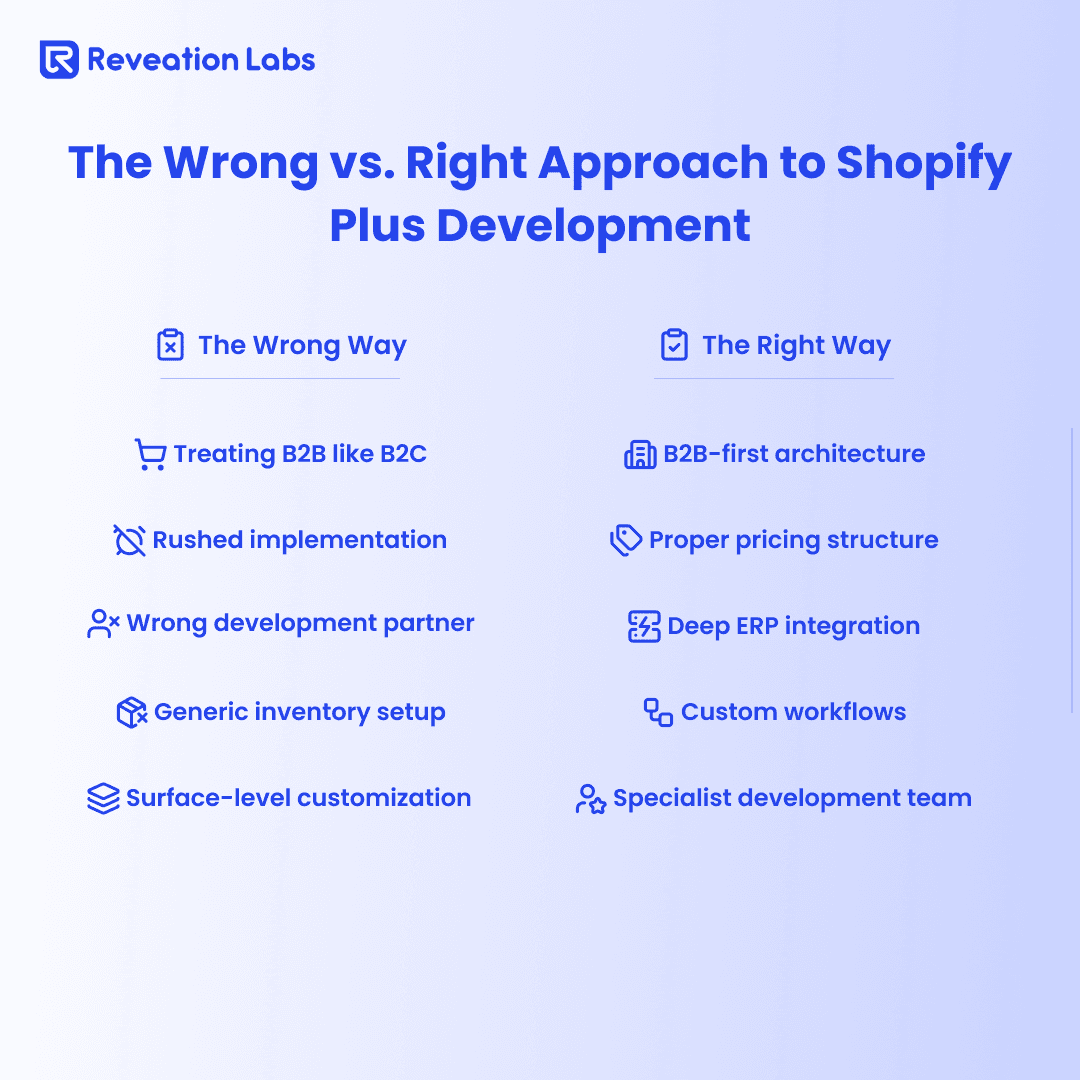
Treating B2B Like B2C Implementation
Here's where most companies get it wrong from day one. They hire general ecommerce developers instead of B2B specialists who understand manufacturing and distribution workflows.
One frustrated business owner summed it up perfectly: "We have a hard time using the full value of the platform". That's not a platform problem. That's an implementation problem.
Companies use consumer-focused themes and workflows for business buyers. They miss B2B-specific features that Shopify Plus actually offers. They treat complex business processes like simple consumer purchases.
The result? Expensive systems that feel clunky and don't solve real business problems.
Rushing Implementation Without Proper Planning
Want to know why so many B2B implementations fail? Companies skip the discovery phase that maps their actual business requirements.
They don't plan complex pricing structures before development starts. They failed to architect ERP integration properly from the beginning. They treat the technical foundation as an afterthought.
One business owner described their experience: "Setting it up is a mess, things sync slowly, and it's a constant battle to keep it running". This isn't a platform failure. This is what happens when you rush implementation without proper planning.
Successful Shopify Plus Development starts with understanding your business workflows before writing a single line of code.
Choosing the Wrong Development Partners
Here's a reality check that might sting. Many companies work with agencies that don't understand manufacturing and distribution workflows.
They choose generic Shopify developers who don't know B2B complexity exists. They miss specialized B2B features because their developers don't even know these capabilities are available.
In the above link Reddit forum, one user says: "We are on Plus and still use SparkLayer. The Plus B2B features are terrible". But here's what's really happening. The native B2B features weren't implemented properly by developers who understand how they actually work.
When you choose the wrong development partner, you end up fighting the platform instead of leveraging its strengths.
Five Implementation Mistakes That Kill B2B Success
1. Poor Pricing Architecture Planning
Remember that medical supplies distributor struggling with pricing? They have PRO customers getting 15% discounts, Dealer customers getting 25% discounts, plus regular List pricing across 40 different collections.
The problem wasn't Shopify Plus. It was how they structured their pricing rules from the beginning.
"Discount codes don't work with product discounts", they complained. But here's the thing: Shopify Plus can absolutely handle complex pricing when architected correctly. The issue was poor initial setup, not platform limitations.
With a proper Shopify Plus development agency, complex pricing structures work seamlessly. You just need developers who understand how to build them right.
2. Ignoring Native B2B Features
This one's going to shock you. Companies pay premium prices for Shopify Plus, then immediately start looking for third-party solutions because they don't know what the platform actually includes.
Take the "500 line-item limit" complaint. Yes, there are order limits, but these can be worked around with proper architecture and bulk order functionality that exists within the platform.
Companies miss customer groups, tiered pricing, and advanced inventory management features. They don't leverage bulk ordering capabilities or proper approval workflows.
Why? Because their developers don't specialize in B2B Shopify Plus Development and miss these powerful features entirely.
3. Wrong Authentication Setup Choices
Business owners complain about "passwordless, two-factor authentication via email every single time" frustrating their customers.
But here's what they don't realize: this is configurable. The authentication flow they're stuck with results from wrong implementation choices, not platform requirements.
B2B companies need different authentication flows than B2C businesses. Proper Shopify Plus Development creates smooth, professional experiences that business buyers expect.
The platform supports this. Most implementations just don't set it up correctly.
4. Generic Inventory Management Approach
Made-to-order versus stock items. Bundle products that oversell. Real-time sync problems between systems.
These aren't platform limitations. These are implementation issues that come from generic inventory management approaches.
Shopify Plus can handle complex inventory scenarios when you understand how to architect the data flow correctly. The problems come from treating B2B inventory like simple consumer product management.
Success requires understanding manufacturing workflows and distribution processes before touching inventory settings.
5. Surface-Level Customization Instead of Deep B2B Integration
One assessment noted: "Limited customization makes it a challenging choice for wholesalers". This reveals a fundamental misunderstanding of what Shopify Plus actually offers.
Shopify Plus is highly customizable for B2B growth when you know how to leverage its capabilities properly. The limitation isn't the platform. It's working with agencies that only scratch the surface of what's possible.
Generic agencies miss the powerful B2B features. They don't understand deep integration possibilities. They treat Shopify Plus like a basic ecommerce platform instead of the enterprise solution it actually is.
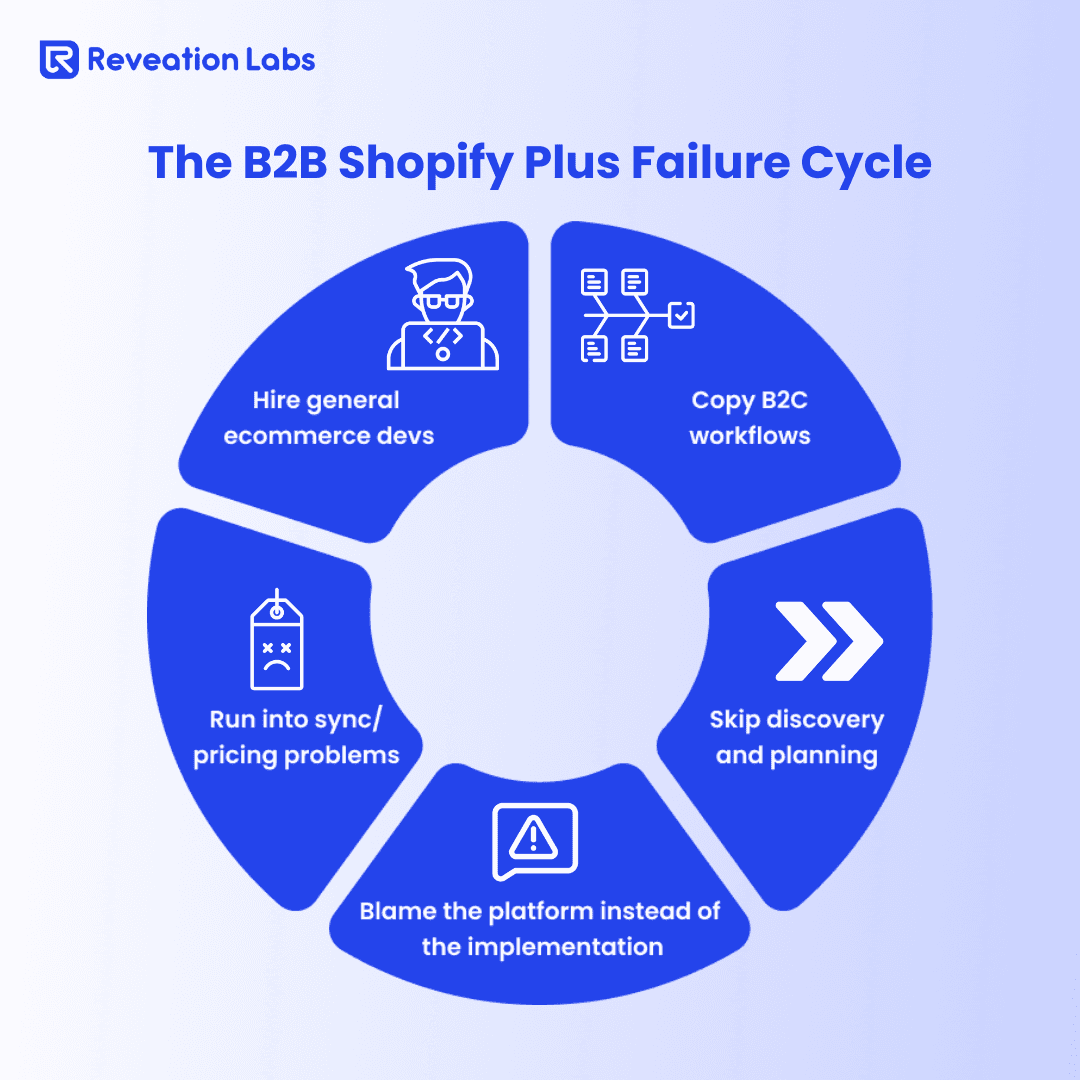
What Successful B2B Companies Do Differently
They Start with B2B-First Architecture
Successful companies understand business workflows before touching code. They map complex pricing, approval flows, and inventory needs upfront.
They choose development partners who specialize in B2B Shopify Plus Development. They plan for scale and complexity from day one instead of retrofitting solutions later.
This approach prevents the problems that plague generic implementations.
They Leverage Shopify Plus B2B Features Properly
Companies that succeed use customer companies and locations effectively. They set up proper pricing rules and customer groups from the beginning.
They configure bulk ordering and approval workflows correctly. They implement custom checkout flows designed specifically for B2B needs.
These aren't third-party add-ons. These are native Shopify Plus capabilities that most implementations completely miss.
They Plan Integration Architecture Correctly
ERP integration gets planned as core architecture, not as an afterthought. Data flow mapping happens before development starts.
Real-time sync includes proper error handling and validation. Custom APIs get built when needed for complex business logic.
This prevents the sync problems and data corruption that plague rushed implementations.
Manufacturing and Distribution Success Patterns
Proper Made-to-Order Implementation
Remember the manufacturer asking about "ability to still sell an item as a pre-order when inventory = 0"? This is totally achievable with proper Shopify Plus Development.
Production lists get automated alongside picking lists. Multi-warehouse coordination works with proper inventory sync. Lead time calculations integrate seamlessly into the customer experience.
The platform supports these workflows. Most implementations just don't set them up correctly.
Technical Specifications Done Right
BOMs and technical specifications become structured data, not just product descriptions. Compliance tracking integrates with product management systems.
Regional requirements get handled through proper data architecture. Quality control integration works with production workflows.
This requires understanding manufacturing processes, not just ecommerce functionality.
True B2B Operational Integration
Net payment terms and purchase orders get handled seamlessly. Sales rep portals provide account-specific access without security issues.
Approval workflows handle large orders automatically. Quote generation and contract management integrate with existing business systems.
These capabilities exist within Shopify Plus. Success comes from knowing how to implement them properly.
With the right B2B eCommerce consulting guidance, manufacturers and distributors can avoid common Shopify Plus development mistakes and build a storefront that truly supports complex B2B workflows.
The Reveation Labs Approach to Correct Implementation
B2B-First Shopify Plus Development
At Reveation Labs, we understand that B2B requires different architecture from day one. Our discovery phase maps business requirements before development starts.
Our specialized team knows Shopify Plus B2B capabilities inside and out. Architecture planning prevents the problems other companies face with generic implementations.
This isn't a theory. It's our proven methodology for successful Shopify Plus Development projects.
Proven Results with Complex B2B Needs
De Havilland Aircraft of Canada (DHC), who partnered with us for their B2B aftermarket parts distribution system.
The challenge? Managing over 110,000 unique parts with complex pricing, multi-warehouse inventory, and seamless ERP integration.
Our solution delivered real-time ERP integration with two-way sync. Custom checkout flows handle aerospace-specific requirements. Advanced parts catalog with intuitive search functionality.
This shows what's possible with proper Shopify Plus Development that leverages the platform's full capabilities.
Why B2B Specialization Matters
Understanding manufacturing workflows and distribution processes makes the difference between success and frustration.
We know which Shopify Plus features solve specific B2B problems. Our custom development enhances rather than replaces platform capabilities.
We take a long-term partnership approach for ongoing optimization as your business grows.
The Bottom Line
Shopify Plus is incredibly powerful for B2B when implemented correctly. The struggles documented across forums and user experiences come from wrong approaches, not platform limitations.
Success requires B2B-specialized development partners who understand both the platform's capabilities and your industry's specific needs.
The medical supplies company paying $2,400 monthly but struggling with pricing? Their problems are fixable with proper Shopify Plus Development. The manufacturer hitting variant limits? Those constraints are workable with the right architectural approach.
The distributors complaining about authentication flows? Those experiences are customizable when you know how to implement them correctly.
Every major complaint we researched traces back to implementation choices, not platform shortcomings. Companies that partner with B2B specialists who understand Shopify Plus Development get dramatically different results.
When you're ready to leverage Shopify Plus properly for your manufacturing or distribution business, the platform delivers everything you need. You just need partners who know how to unlock its full potential from the beginning.
The difference between frustration and success often comes down to choosing the right implementation approach from day one.