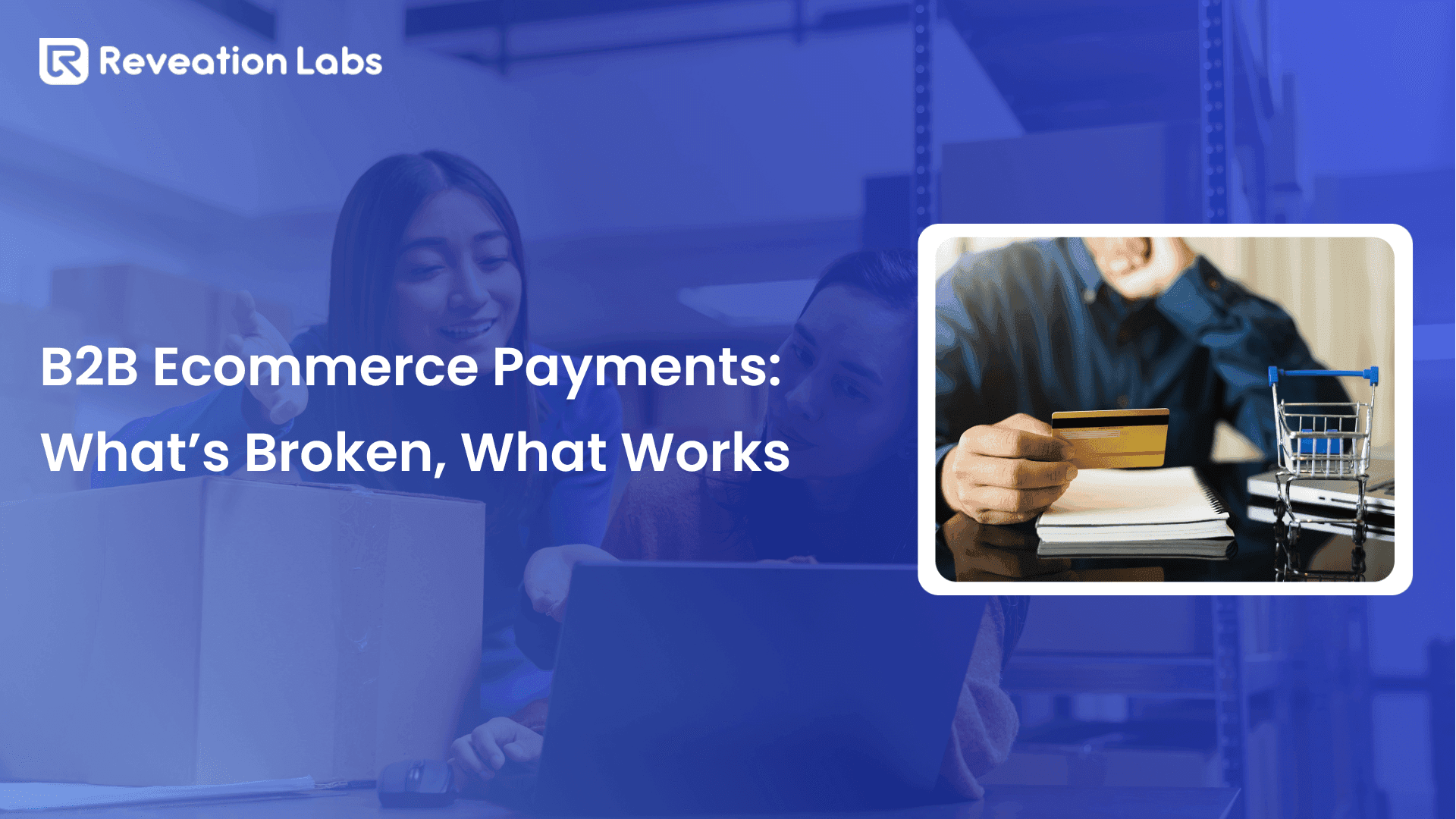

Most B2B companies recognize that optimized payment systems drive growth, yet very few actually automate their processes.
Meanwhile, 61% of small businesses struggle with cash flow problems, and 32% can't even pay their vendors or employees on time.
Picture this, a manufacturing company processing $2 million monthly in B2B orders but still juggling spreadsheets, emails, and manual invoice matching. Sound familiar?
Your b2b ecommerce payments system might be silently killing your growth. Every delayed payment, every manual error, every frustrated supplier relationship chips away at your bottom line.
The good news? Modern manufacturers and distributors are solving these problems with proven strategies that we'll reveal in this blog.
The Manual Payment Processing Nightmare
How much time does your finance team waste on manual tasks that should take minutes, not hours?
Manual payment processing creates a cascade of problems that most manufacturers don't realize until it's too late. Your accounts payable team spends countless hours matching purchase orders to delivery receipts to invoices, a process that should be seamless but rarely is.
Here's what really happens behind the scenes. Manual data entry has an error rate of 1.6% per invoice. That might sound small, but when you're processing hundreds or thousands of invoices monthly, those errors compound fast. Each mistake costs an average of $53 to fix, not counting the time your team spends tracking down discrepancies.
The three-way matching disaster hits manufacturing companies particularly hard. You need purchase orders, delivery receipts, and invoices to align perfectly before payments go out. But when this matching happens manually, errors multiply and payment cycles stretch longer than they should.
Your spreadsheet trap is even worse than you think. Most B2B companies still track payments in Excel, which means zero real-time visibility into your actual cash position. Data entry errors multiply downstream, creating audit trail gaps that make compliance a nightmare.
Manual approval workflows slow everything down further. Multiple review levels mean invoices sit in someone's inbox while your suppliers wait for payment. This delays your supply chain and strains the relationships you depend on to keep production running smoothly.
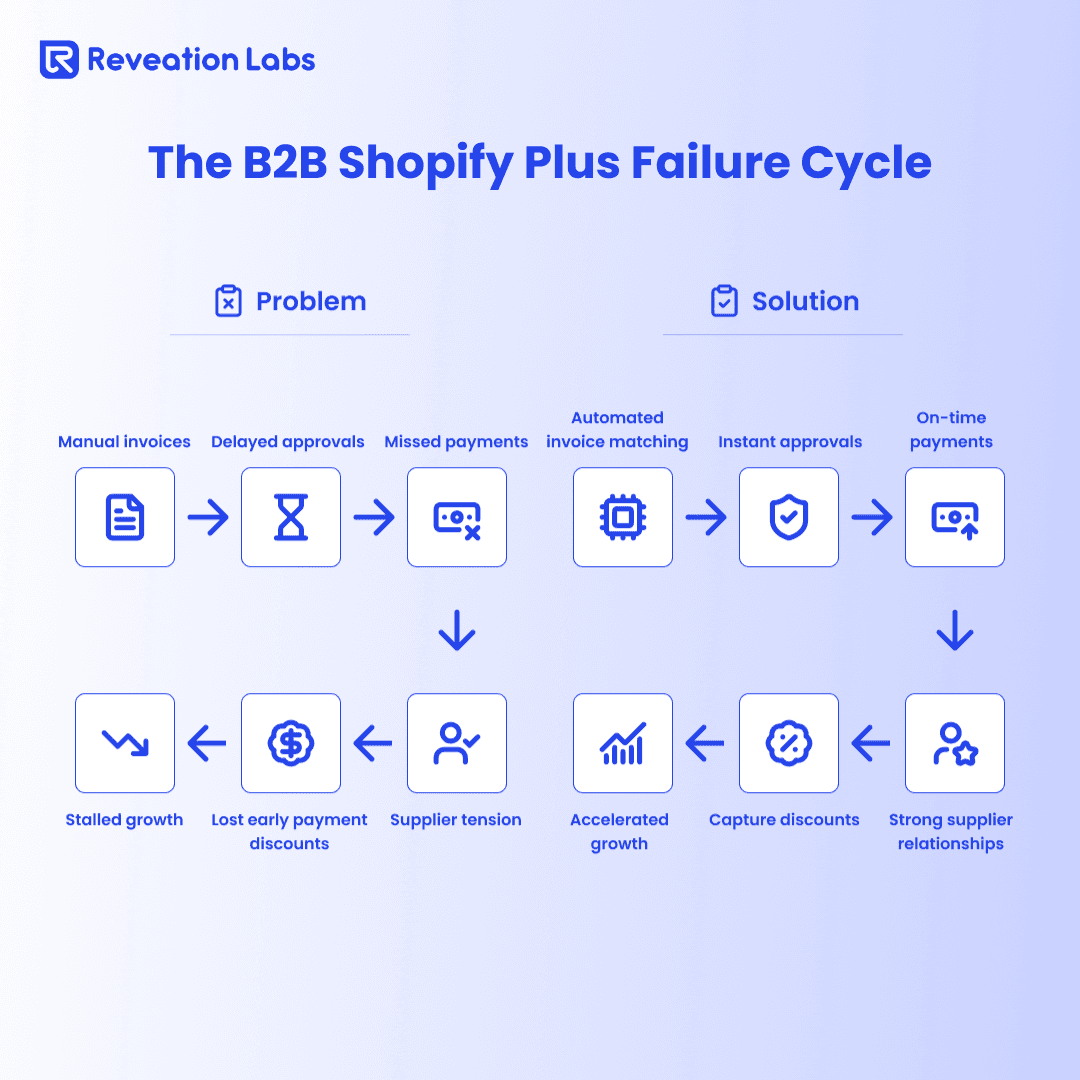
Complex B2B Pricing and Payment Terms Chaos
Why are b2b ecommerce payments so much more complicated than consumer transactions?
B2B payment terms create complexity that consumer businesses never face. Net 30, Net 60, and Net 90 terms are standard in manufacturing and distribution, meaning you wait months to get paid while still covering production costs and employee salaries.
Customer-specific pricing makes everything worse. Each major client has unique payment structures, contract-based pricing for enterprise deals, and geographic variations that change based on shipping locations. Add promotional pricing on top of existing volume discounts, and your payment system becomes a maze of special cases.
The purchase order problem compounds these issues. B2B transactions require PO workflows that consumer sales don't need. Manual PO processing introduces errors and delays that ripple through your entire payment cycle. Integration challenges between PO systems and payment platforms create data silos that finance teams struggle to reconcile.
Multiple payment methods per customer relationship add another layer of complexity. Your biggest clients might use corporate credit cards for small orders, ACH transfers for monthly invoices, and wire transfers for large equipment purchases, all requiring different processing workflows and reconciliation methods.
Volume-based discounts and early payment incentives sound great in theory, but they create pricing nightmares when processed manually. Your sales team promises one thing, your invoicing system calculates another, and your payment processing struggles to keep up with the variations.
ERP Integration Failures That Kill Cash Flow
What happens when your b2b ecommerce payments don't sync properly with your business systems?
ERP integration promises to eliminate manual data entry and streamline payment processing. Reality tells a different story. Many implementations create more data silos instead of fewer, leaving finance teams to manually reconcile information between systems that should talk to each other automatically.
Poor integration leads to "unapplied cash" problems, money comes in, but your system can't automatically match it to the right invoices. This creates a bottleneck where finance team members spend hours each week figuring out which payments belong to which orders.
Real-time sync failures hurt manufacturing companies especially hard. When inventory, pricing, and payment data fall out of sync, you lose visibility into what you actually have available to sell. Manual intervention becomes required for basic matching tasks that should happen automatically.
The multi-system problem affects most growing manufacturers. You have separate systems for invoicing, banking, and accounts receivable, but data doesn't flow seamlessly between platforms. Custom APIs and manual mapping requirements eat up IT resources that could be focused on production improvements.
Data reconciliation becomes a major bottleneck when systems don't integrate properly. Finance teams spend up to 80% of their time on reconciliation tasks instead of strategic activities that could improve cash flow and supplier relationships.
Also read: Why Most Manufacturers and Distributors Are Getting Shopify Plus Development All Wrong
Security and Fraud Concerns Blocking Automation
Are security worries preventing your company from modernizing b2b ecommerce payments?
Security concerns top the list of reasons why manufacturers avoid payment automation. High-value B2B transactions make attractive targets for fraudsters, and payment fraud schemes specifically target businesses with complex invoicing processes.
Here's the irony, manual processes actually increase fraud risk rather than reducing it. Paper checks can be altered or lost in the mail. Insider threats thrive in manual approval processes where oversight is limited. Unsecured spreadsheets and email attachments create data breach vulnerabilities that automated systems prevent.
Fake invoice schemes specifically target companies with manual payment processes. Fraudsters send invoices for services never provided, counting on busy accounts payable teams to process payments without proper verification. Manual systems lack the automated matching and verification that catches these schemes.
PCI DSS compliance requirements add complexity that manual systems struggle to meet. Credit card information must be handled according to strict standards that spreadsheets and email systems can't provide. Automated payment platforms include built-in compliance features that manual processes require additional tools to achieve.
Real security comes through automation, not manual oversight. Digital audit trails provide better tracking than paper processes. Built-in fraud detection monitors transaction patterns for suspicious activity. Secure payment gateways encrypt sensitive information at levels that manual systems can't match.
Cash Flow Management Problems Crushing Growth
How do payment delays impact your manufacturing operations?
Cash flow problems plague most small and medium-sized manufacturers. According to a comprehensive study, 61% of small businesses struggle with cash flow issues, and 32% can't pay vendors, employees, or loan payments on time due to insufficient cash. This isn't just an accounting problem, it's an operational crisis waiting to happen.
Extended payment cycles tie up working capital that you need for raw materials, equipment maintenance, and payroll. When customers take 60-90 days to pay while you need to purchase inventory and cover production costs immediately, the cash flow gap becomes a constant source of stress.
Poor visibility into your actual cash position makes strategic planning nearly impossible. Finance teams manually aggregate information from multiple bank statements, turning cash flow forecasting into educated guesswork rather than data-driven decision making.
Late payment penalties strain supplier relationships that manufacturing companies depend on. Missing early payment discounts costs money directly, while payment delays reduce your procurement leverage for future negotiations. Suppliers may require prepayment or tighter credit terms if your payment history shows consistent delays.
The visibility problem extends beyond just knowing your current balance. Without real-time b2b ecommerce payments data, strategic decisions get delayed while teams gather financial information manually. This slows down everything from equipment purchases to hiring decisions.
Modern Solutions for Manufacturing Payment Problems
What does a properly functioning b2b ecommerce payments system look like for manufacturers and distributors?
Modern payment automation eliminates the manual bottlenecks that slow down manufacturing operations. Automated systems handle invoice matching, approval workflows, and payment processing without the errors and delays that plague manual systems.
Seamless ERP integration ensures that payment data flows automatically between your business systems. Real-time synchronization keeps inventory, pricing, and payment information aligned across platforms. This eliminates the reconciliation work that consumes finance team time and provides accurate cash flow visibility for strategic planning.
Advanced b2b ecommerce payments platforms handle the complex pricing and terms that manufacturing companies require. Customer-specific pricing engines manage volume discounts, early payment incentives, and contract-based terms automatically. Net terms and credit management integrate directly into the checkout process for B2B customers.
Security improvements come built-in with modern payment platforms. Automated systems provide better fraud detection than manual oversight. Digital audit trails and PCI DSS compliance features protect sensitive information while ensuring regulatory requirements are met automatically.
The results speak for themselves when manufacturers implement proper automation. Companies processing 1,000+ invoices monthly can save approximately $120,000 annually by switching from manual to automated processing. Error rates drop significantly, processing times improve dramatically, and finance teams can focus on strategic activities instead of manual data entry.
Integration That Actually Works
How do successful manufacturers handle b2b ecommerce payments integration?
Real integration goes beyond just connecting systems, it requires understanding manufacturing workflows and distribution requirements. Successful implementations handle complex inventory management, production scheduling, and multi-warehouse coordination automatically.
Payment solutions that work for manufacturers include multiple payment methods for different customer types. Corporate credit cards for small orders, ACH transfers for regular invoices, and wire transfers for large equipment purchases all process through unified workflows that maintain proper audit trails.
Custom development enhances existing systems rather than replacing them completely. This approach recognizes that manufacturing companies have invested heavily in ERP and production systems that work well for their operations. Payment improvements should complement these investments, not compete with them.
Real-time payment confirmations optimize cash flow by providing immediate visibility into incoming funds. This enables better working capital management and more confident purchasing decisions for raw materials and inventory.
Many of these payment challenges can be minimized with the help of B2B eCommerce consulting, which guides businesses toward more reliable, scalable, and user-friendly payment solutions.
The Path Forward for Manufacturers
Your b2b ecommerce payments system doesn't have to remain a source of frustration and inefficiency.
The five critical problems, manual processes, complex payment terms, ERP integration failures, security concerns, and cash flow management issues, all have proven solutions that modern manufacturers are implementing successfully.
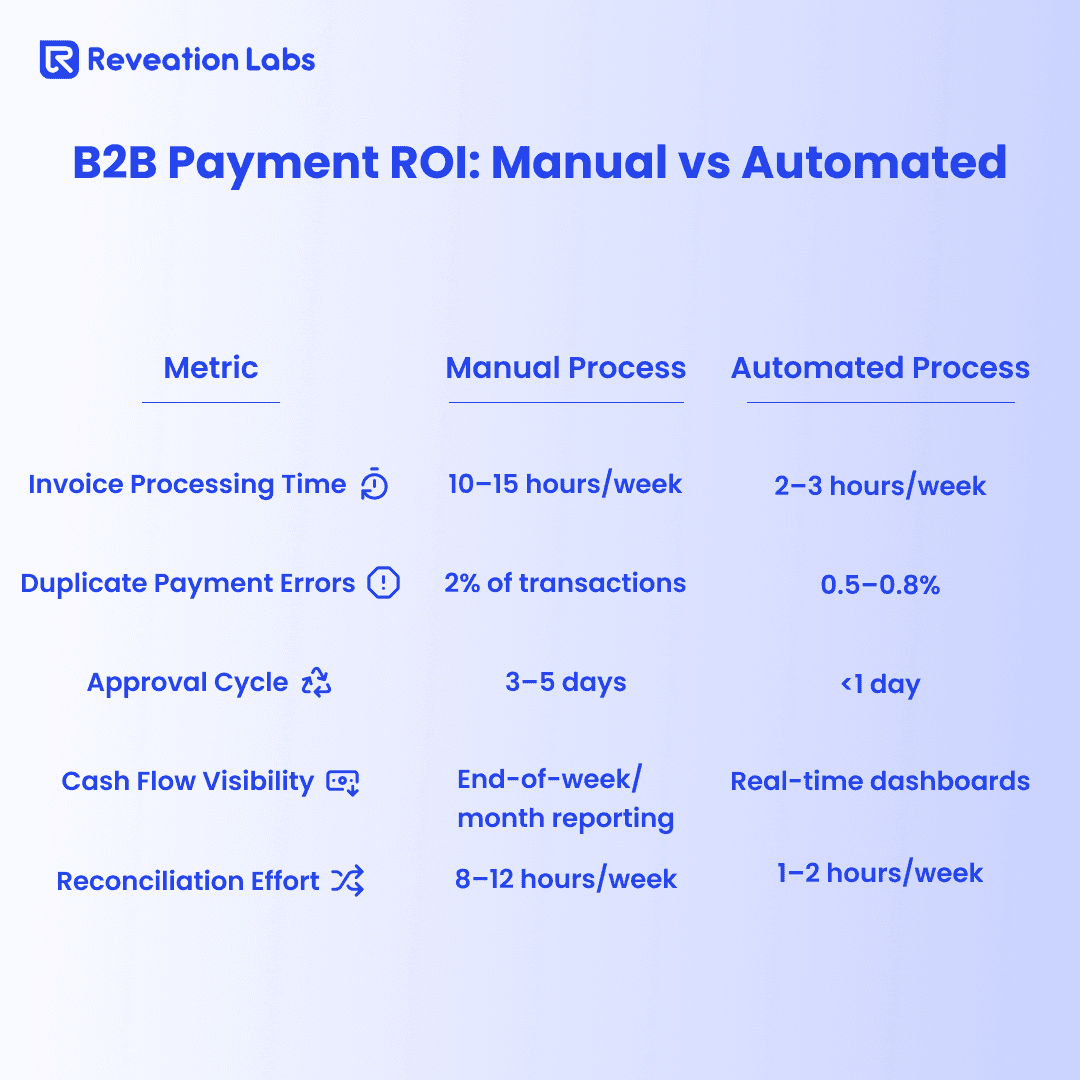
How Reveation Labs Solves B2B Payment Challenges
Ready to eliminate the b2b ecommerce payments headaches that plague manufacturers and distributors?
At Reveation Labs, we've built our reputation for having B2B eCommerce solutions for dealing with exactly these payment processing problems for companies like yours. Our specialized focus on B2B manufacturers and distributors means we understand the unique challenges you face, from complex pricing structures to ERP integration nightmares.
Integration That Works
Your existing ERP, CRM, and accounting systems don't need to be replaced, they need to be connected properly. Our b2b ecommerce payments integration approach handles the complex workflows that manufacturing companies require. We integrate with leading payment systems like Stripe, PayPal, and Authorize.net while maintaining real-time synchronization with your business systems.
Real-time inventory updates, automated order fulfillment, and supply chain efficiency happen automatically when systems are integrated correctly. No more manual data entry, no more reconciliation headaches, and no more delayed cash application that inflates your Days Sales Outstanding.
Built for Manufacturing Complexity
We specialize in the complex pricing engines that B2B companies need. Customer-specific pricing, volume discounts, contract-based terms, and Net 30/60/90 payment cycles all get handled automatically through our integrated checkout processes. Your sales team stops spending time on pricing calculations, and your finance team stops chasing down payment discrepancies.