
When a procurement manager at an aerospace manufacturer asks ChatGPT, "Which suppliers provide IATF 16949-certified fasteners with real-time inventory access?" AI answers instantly, no ads, no rankings to scroll, no sales pressure.
Buyers trust it more than Google because it feels objective and already “researched.” Where does your company appear in that AI-generated answer?
If you're not sure, you've already lost that deal. This is the reality facing manufacturers and distributors in 2025, and the answer lies in understanding top-rated answer engine optimization services that position your business as the trusted authority AI systems cite first.
1. Why Your Current SEO Strategy Is Becoming Invisible
Answer engine optimization (AEO) represents a fundamental shift in how B2B buyers discover suppliers. Unlike traditional SEO that focuses on ranking your website on search engine results pages, top-rated answer engine optimization services optimize your content to appear directly within AI-generated responses across ChatGPT, Perplexity, Google AI Overviews, Microsoft Copilot, and Bing Chat.
The statistics paint a compelling picture of this transformation. Ninety-four percent of procurement executives now use generative AI at least once weekly for sourcing decisions.
Eighty-nine percent of B2B buyers have incorporated AI search into at least one area of their purchasing process. These aren't small pilot programs or experimental initiatives. This is mainstream buyer behavior reshaping how industrial sourcing happens.
When AI systems respond to a buyer's query, they cite sources based on credibility, structure, and availability of authoritative information.
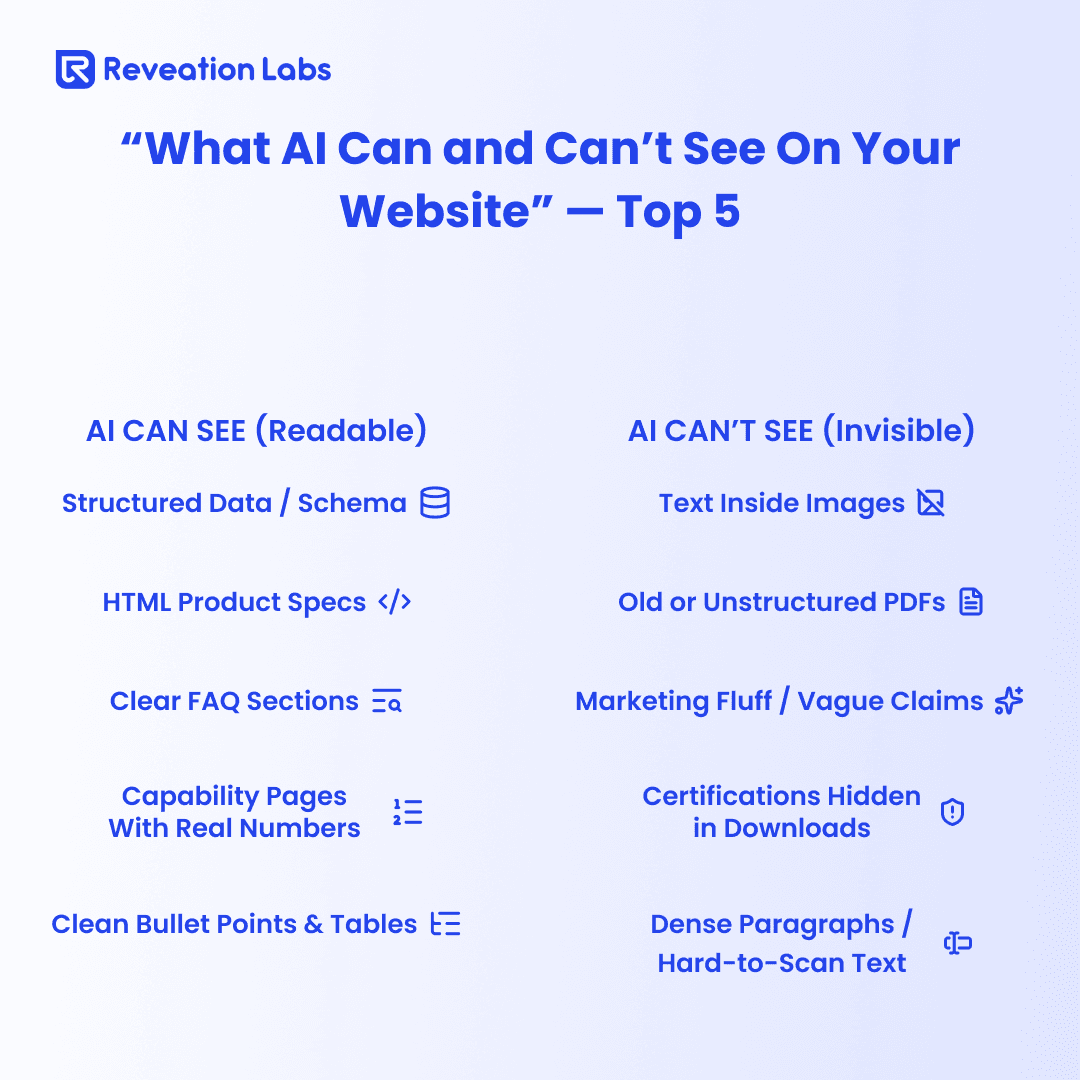
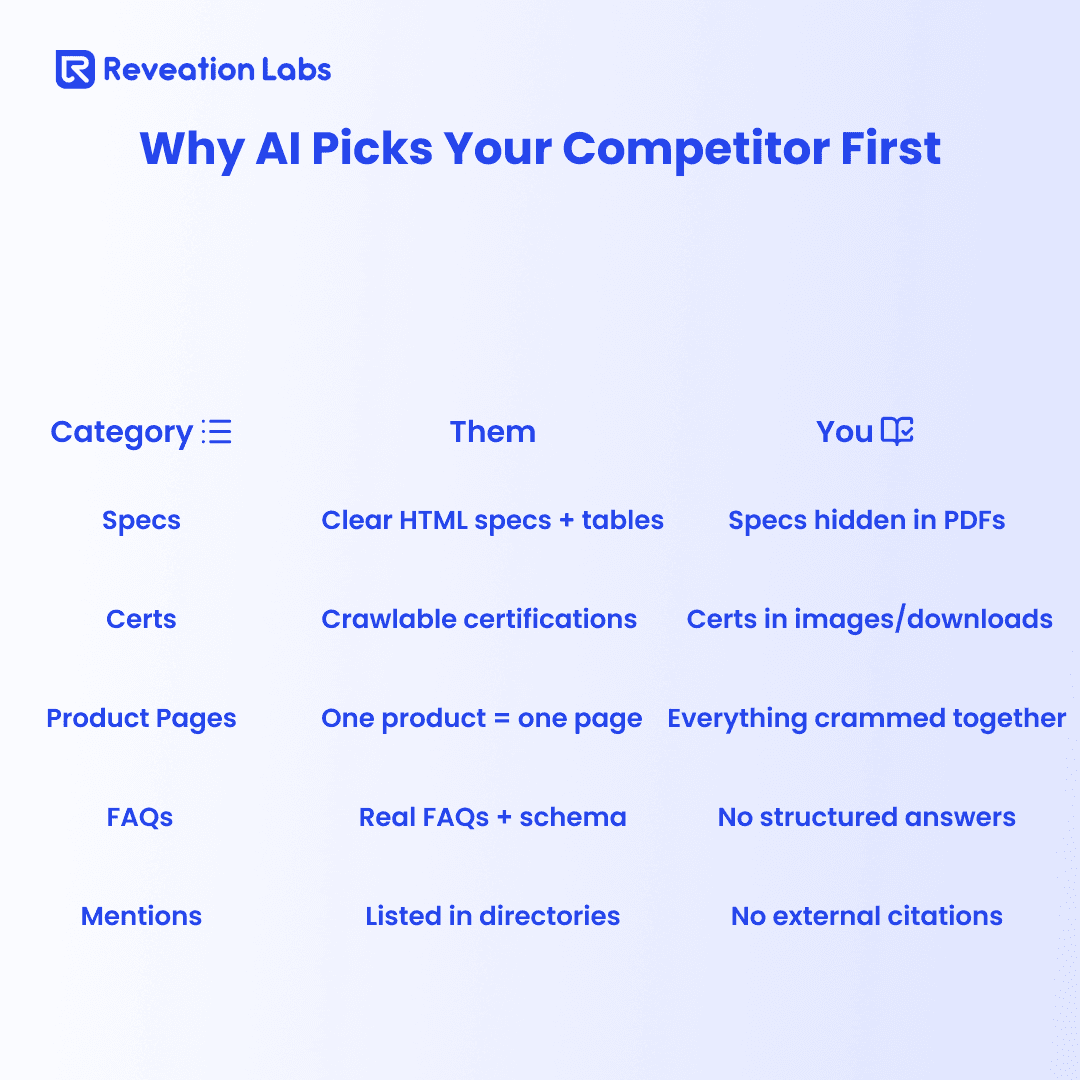
If your compliance certifications are buried in PDFs, if your technical specifications aren't machine-readable (a format that AI systems can parse), or if your content isn't structured for AI extraction, you simply won't appear in those critical moments when buyers are making sourcing decisions.
2. B2B Procurement Revolution: How Industrial Buyers Search
Industrial buyers skip keywords and go straight to AI with complex questions like:
"IATF 16949 certified supplier for automotive control arms with North American experience and real-time inventory?"
"Which distributors carry FDA food-contact certified PTFE tubing with stock visibility?"
These aren't searches; they're qualification checklists. AI draws from sources that clearly demonstrate compliance credentials, technical specifications, and inventory depth. Traditional SEO wasn't built for this.
Buyers are vetting you before your sales team knows they exist. Research shows one in four B2B buyers now use AI more than Google when researching suppliers, and two-thirds rely on AI chatbots as much or more than search engines. In the tech and software sectors, that number hits 80%.
Most buyers narrow their vendor list from five to eight down to just three finalists before ever reaching out. If your capabilities aren't structured for AI to read and cite, you're invisible when it matters most.
That's why answer engine optimization is critical for manufacturers and distributors; AI pre-qualifies vendors before procurement teams make contact.
3. What Top-Rated Answer Engine Optimization Services Deliver
When you hire a top-rated answer engine optimization service, you're not paying for a rebranded eCommerce SEO agency. You're investing in four core deliverables specifically designed for AI visibility and authority building.
First, technical infrastructure optimization ensures your website loads at speeds AI systems prioritize (typically under 2 seconds), implements machine-readable architecture, and enables AI crawlers to access all critical content without barriers.
This means removing password-protected specification pages, ensuring compliance documentation is HTML-based rather than PDF-only, and structuring your product database for AI parsing.
Second, structured data implementation using Schema markup (special code that tells AI systems what information means) is non-negotiable. FAQ Schema tags question-answer pairs, making them eligible for direct citation.
Product Schema includes technical specifications, certifications, manufacturing part numbers (MPN), and global trade item numbers (GTIN).
HowTo Schema documents your installation, maintenance, and troubleshooting procedures. Compliance Schema explicitly tags certifications with dates, issuing bodies, and applicable product lines.
For manufacturers with 5,000+ SKU catalogs, top-rated services automate this markup using data feeds and CMS plugins rather than manual page-by-page coding.
Third, content optimization restructures your existing materials for AI readability. This means leading pages with concise 40 to 60-word direct answers before diving into supporting details. Headers become real questions your buyers ask: "What tolerances can you achieve?" instead of "Our Precision Capabilities."
Content uses scannable formatting with bullet points and numbered lists rather than dense paragraphs. For distributors, this transforms how you present inventory and availability. Instead of "Contact us for stock levels," you implement a real-time inventory schema that AI systems access directly.
Fourth, Authority building means getting your brand mentioned where AI actually looks. AI systems pull from industry publications, Google Knowledge Graph (the database AI uses to understand companies and relationships), procurement marketplaces, and case studies.
Your goal: appear in these trusted sources so AI cites you as the expert.
4. Industry-Specific Implementation for Manufacturers
Manufacturers implementing top-rated answer engine optimization services follow a proven framework addressing the exact queries procurement teams ask AI.
Capability-based query optimization creates dedicated pages answering specific technical questions.
Instead of one generic page titled "Our Machining Services," you create AI-readable pages structured around buyer questions: "What tolerances can you achieve?" "What materials do you machine?" "What's your monthly production capacity?"
Each question gets a concise answer followed by detailed supporting information, with capability matrices showing tolerance ranges paired with material compatibility and volume options.
Compliance-driven content architecture moves regulatory information from PDF specification sheets into crawlable HTML pages with explicit schema markup. An aerospace manufacturer doesn't bury "ASME Section VIII certification" in a download folder.
They create a dedicated compliance hub with pages like "All our pressure vessels meet ASME Section VIII Division 1 standards with National Board R-stamp authorization" formatted with a schema that makes certification types, dates, and applicable products machine-readable.
Technical documentation optimization recognizes that AI systems can't parse PDF spec sheets effectively. Top-rated answer engine optimization services convert critical specifications into HTML pages with proper schema implementation, then maintain downloadable PDFs for human reference. The HTML becomes the primary source for AI indexing.
Integration capability pages directly address procurement team queries about system compatibility. Equipment manufacturers explicitly list supported protocols (OPC UA, Modbus TCP, Ethernet/IP), integration options, lead times for custom development, and post-implementation training availability.
This level of transparency in an AI-readable format becomes the deciding factor when procurement teams ask AI tools whether your equipment fits their existing production environment.
5. What Makes Distributors Different (And How AEO Helps)
Real-time inventory: When procurement pros ask AI "Who has part XYZ in stock right now?", your dynamic inventory schema connected to your actual management system wins the answer slot. Static data dies fast—live data gets cited in AI responses.
Certifications > product types: Instead of organizing by product category, create compliance hubs like "FDA Food-Contact Certified Thermoplastics" or "Aerospace-Qualified Components." Schema tags connect your certifications directly to buyer queries about standards and regulations.
Make your business terms visible: MOQs, volume discounts, payment terms, and lead time. These are exactly what procurement teams ask AI about. Dedicated pages with HowTo schema showing your ordering procedures get pulled into AI answers about bulk purchasing and just-in-time capabilities.
Own your market niche: "Medical Device Materials Specialists" or "Food Processing Equipment Distributors" become dedicated content hubs. Schema markup signals your industry specialization, so AI systems connect your profile to the right procurement queries with certifications and case studies backing it up.
6. Measuring Top-Rated Answer Engine Optimization Service Performance
Traditional SEO rankings don't tell the story anymore. Google position #1 means nothing if AI isn't citing you. That's why you need separate AEO tracking that measures what matters:
What to track:
- Citation rate (how often AI mentions you in relevant answers)
- Share of voice (your mentions vs. competitors in AI responses)
- Featured snippet wins (rich results that feed AI systems)
- Competitive positioning (how often you beat competitors in citations)
These aren't vanity metrics; they're lead generation numbers. One manufacturer jumped from 12% to 73% AI citation rate in their industry. A building materials distributor saw 32% of new leads coming from AI search within six weeks.
Timeline expectations:
- 2-3 months: Initial AI citations start appearing
- 4-6 months: Significant visibility gains
- 90-120 days: Full ROI of 287-415% for B2B manufacturers
This speed is what separates AEO from traditional SEO, which typically takes 6-12 months to show results. AI platforms need separate dashboards tracking visibility across ChatGPT, Google SGE, Copilot, and Perplexity, not bundled with regular SEO metrics.
7. Top Differentiators Between Top-Rated vs Generic AEO Agencies
Questions to Ask Before Hiring
8. The Implementation Timeline
Phase one (months 1-2) focuses on foundation work: auditing current AI platform visibility across ChatGPT, Google SGE, Copilot, and Perplexity; conducting technical site audits for crawlability and performance; identifying compliance and capability content gaps; and planning schema implementation strategy.
Phase two (months 2-3) involves technical implementation: deploying FAQ, Product, HowTo, and TechArticle schema markup; creating dedicated FAQ pages addressing actual buyer questions (sourced from sales conversations and support tickets); restructuring compliance information from PDFs to crawlable HTML; and optimizing site architecture for AI accessibility.
Phase three (months 3-4) emphasizes content optimization: rewriting product pages in answer-first format; creating capability matrices and comparison tables; mapping real buyer questions identified from CRM and support data; and building authority through industry publication placements and knowledge graph optimization.
Phase four (months 4+) is continuous optimization: weekly prompt-gap analysis identifying queries being asked in AI platforms where you're not appearing; citation tracking across multiple AI platforms; competitive positioning analysis; and monthly content refreshes based on performance data.
9. The ROI Reality for Manufacturers and Distributors
Businesses implementing AEO strategies report 25-30% conversion rate increases compared to traditional SEO approaches. The reason is simple: AI-sourced buyers arrive pre-qualified. They've already asked detailed questions about certifications, specifications, and capabilities before ever clicking through.
Distributors with real-time inventory connected to AI systems win searches competitors can't touch. When procurement asks AI, "Who has XYZ in stock?", your AI-integrated inventory answers directly while others stay invisible.
10. The Window for First-Mover Advantage Is Open Now
Here's the uncomfortable truth manufacturers and distributors need to understand: the first-mover advantage window in AEO is rapidly closing. Over 40% of AI professionals are exploring AEO strategies, but most have no implementation roadmap.
This means established players who implement top-rated answer engine optimization services now will secure competitive dominance before the market saturates and AI search visibility becomes table stakes.
The companies acting today are positioning themselves as the authoritative sources AI systems cite. Their compliance certifications appear first. Their capabilities get referenced. Their inventory becomes the default option. By the time your competitors catch up, you've already built authority that's difficult to challenge.
11. Finding the Right Top-Rated Answer Engine Optimization Service
Your choice of top-rated answer engine optimization service provider determines whether you gain a competitive advantage or waste resources on poorly executed AEO.
Prioritize agencies demonstrating manufacturing and distribution case studies, separate AEO visibility tracking (never bundled SEO metrics), and proven schema implementation at scale.
The reality is that AI search isn't coming. It's here. Ninety-four percent of procurement executives are using it weekly. Your buyers are already searching for you in AI platforms. The only question is whether you're visible when they do.
Top-rated answer engine optimization services ensure you don't miss those critical moments where procurement teams discover, evaluate, and ultimately decide to work with your company.
The ROI timeline is fast. The competitive advantage is real. The first-mover opportunity is closing. This is the moment to act.
Reveation Labs can handle the entire AEO and GEO setup for you, structuring your data, optimizing your content for AI engines, and positioning your brand as the one AI recommends first.