Replatforming is no longer a back-office upgrade. In 2026, it is a growth, operations, and customer experience decision that affects how well B2B companies scale, serve complex buyers, and compete across channels.
$36T
Projected global B2B eCommerce market value by 2026.
84%
Of B2B buyers want suppliers to offer several sales channels.
98%
Of recent migrators say they are satisfied with their current platform after moving.
What the Data Shows
What Matters Most
- Replatforming should be driven by business model fit, not frustration with an aging front end.
- The biggest value usually comes from better integrations, stronger self-service, and cleaner operational workflows.
- The biggest risks are poor migration planning, weak internal adoption, and choosing a platform that does not match B2B complexity.
- The right roadmap improves customer experience while reducing manual work, pricing errors, and operational friction.
The stakes for B2B eCommerce replatforming have only gone up. The global B2B eCommerce market is projected to reach $36 trillion by 2026, while buyer expectations continue shifting toward multi-channel access, self-service, real-time data, and faster digital decision-making.
That shift is exactly why replatforming now sits at the intersection of revenue growth, customer retention, and operational resilience. A slow or rigid platform does not just create technical debt. It slows expansion, increases service costs, and makes it harder to deliver the buying experience modern B2B customers expect.
Why this has become urgent
Recent buyer research shows that B2B customers increasingly expect several sales channels, better self-service, transparent pricing, and accurate stock and shipping information. If your platform cannot support those basics reliably, buyers notice quickly.
Will Your Platform Scale With You?
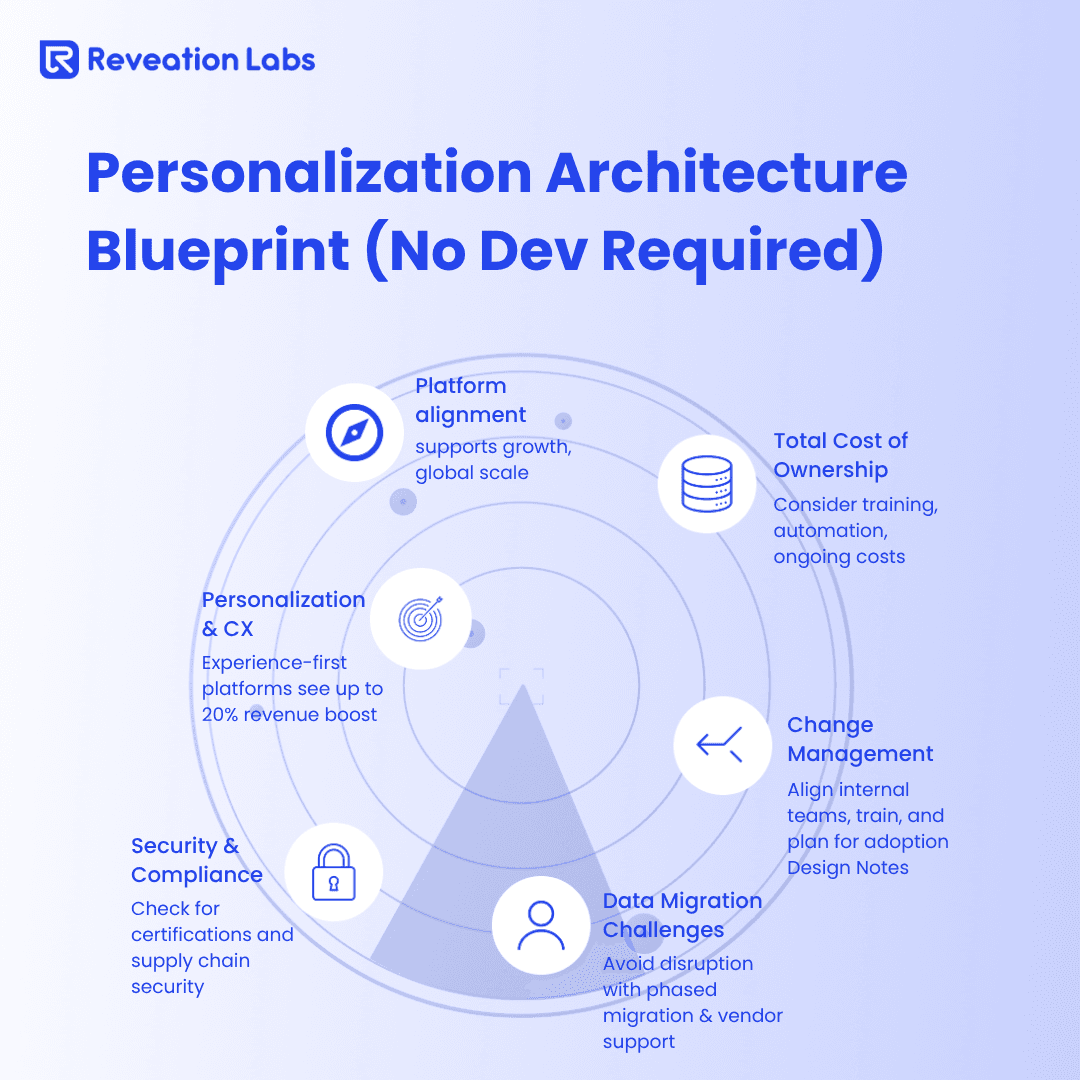
The best platform is not the one with the longest feature list. It is the one that can support your catalog complexity, pricing logic, customer hierarchy, approval flows, integration requirements, and future growth without forcing expensive workarounds every quarter.
What Must Work
- ERP, CRM, PIM, OMS, and warehouse connectivity
- Customer-specific pricing and account structures
- Bulk ordering and repeat purchase workflows
- Multi-store, multi-region, and multi-currency readiness
- Extensibility without over-customizing the stack
Warning Signs
- Basic B2B workflows require heavy custom development
- Integrations break or lag when volumes increase
- International expansion depends on manual workarounds
- Business teams depend on developers for routine changes
- Performance drops as catalog or account complexity grows
Teams still evaluating vendors usually benefit from comparing workflow fit, integration depth, and scalability before committing to a roadmap. A good place to start is this platform comparison guide.
What Do Buyers Expect Now?
In 2026, a polished storefront is not enough. Buyers want real self-service. That means accurate pricing, live inventory, easy reordering, account-specific experiences, and fast access to the information needed to complete a purchase without waiting on manual support.
What Buyers Want
Self-service tools
Quick order, saved lists, account access, and fewer manual back-and-forth steps.
Real-time visibility
Live pricing, stock availability, and dependable shipping information.
Multi-channel consistency
A connected experience across portal, marketplace, sales, and support channels.
Personal relevance
Customer-specific pricing, products, approvals, and recommendations.
This is why ERP-connected commerce matters so much. If the store cannot surface reliable operational data, self-service breaks down, and your digital channel becomes another place where buyers have to verify everything manually.
For operations-heavy businesses, accurate stock visibility becomes part of customer experience. This is especially clear in our article, real-time inventory and multi-warehouse fulfillment.
What Does Personalization Really Mean?
Many B2B teams still treat personalization like merchandising. In practice, it is broader than that. It shapes which products buyers see, how pricing rules are applied, who can approve orders, what inventory is visible, and how quickly teams can reorder or manage account tasks.
Weak Personalization
- Same catalog for every account
- Manual pricing confirmation
- Little visibility into account-specific workflows
- Sales teams still handling routine repeat orders
Mature Personalization
- Customer-specific catalogs and pricing
- Role-based access across buying teams
- Saved lists, quick reorder, and approval routing
- Relevant product discovery tied to account context
When personalization is treated as part of the overall buying journey, it usually connects naturally with broader B2B eCommerce solutions rather than being added later as a design layer.
Where Do Replatforms Break Down?
Data migration is rarely just a technical transfer. It is a business quality issue. Product records, contract pricing, customer hierarchies, order history, and content all shape what buyers experience on day one. If that data is incomplete or inconsistent, the launch may go live but the business still feels broken.
What to Avoid
Do not wait until late-stage implementation to clean product data, map pricing logic, or validate account structures. Those issues surface directly in ordering, search, and customer trust.
Migration Checklist
- Audit products, customers, orders, content, and pricing before build progresses too far
- Decide what to migrate, archive, merge, or rebuild
- Validate search, checkout, pricing, and permissions in a controlled MVP phase
- Choose a phased or big-bang cutover with clear rollback logic
- Use automated reconciliation for inventory, order, and account syncs
The transition tends to go better when architecture, scope, and rollout are planned together. That is where experienced implementation services can reduce risk early.
What Risks Get Missed Early?
Security and compliance should shape vendor evaluation from the start, not be reviewed after the commercial decision is nearly done. B2B commerce platforms often touch customer-specific pricing, order history, account permissions, operational data, and external systems that are central to daily business.
Security Checks
If AI capabilities are entering the evaluation process, governance matters even more. Teams that want to connect platform decisions with the bigger market shift can review these 2026 B2B eCommerce trends.
What Will It Really Cost?
A platform can look affordable during procurement and become expensive in operation. License cost is only one line item. Total cost of ownership includes implementation, integrations, hosting, support, upgrades, training, custom development, and the cost of future change.
A Better ROI Lens
The real question is not whether the new platform is cheaper. It is whether it reduces manual work, improves conversion, shortens reorder time, and supports growth without compounding technical debt.
That is why ROI conversations usually work best when tied to platform selection criteria early. Our blog on how to choose a B2B eCommerce platform fits naturally here.
ROI Metrics
- Online revenue contribution
- Manual order-processing effort
- Average reorder time
- Pricing and order error rates
- New market launch speed
- Customer adoption of self-service features
Why Do Good Projects Stall?
The platform can be right and the rollout can still underperform if the organization is not ready to work differently. Replatforming changes how sales, service, operations, finance, and IT interact with the customer journey. That means adoption planning is part of the project, not a separate task for later.
Who Must Be Involved
Cross-functional involvement improves requirement quality, reduces workflow blind spots, and makes adoption more realistic. For teams that need strategic help before rollout, this is often the point where B2B eCommerce consulting becomes valuable.
What Does Success Look Like?
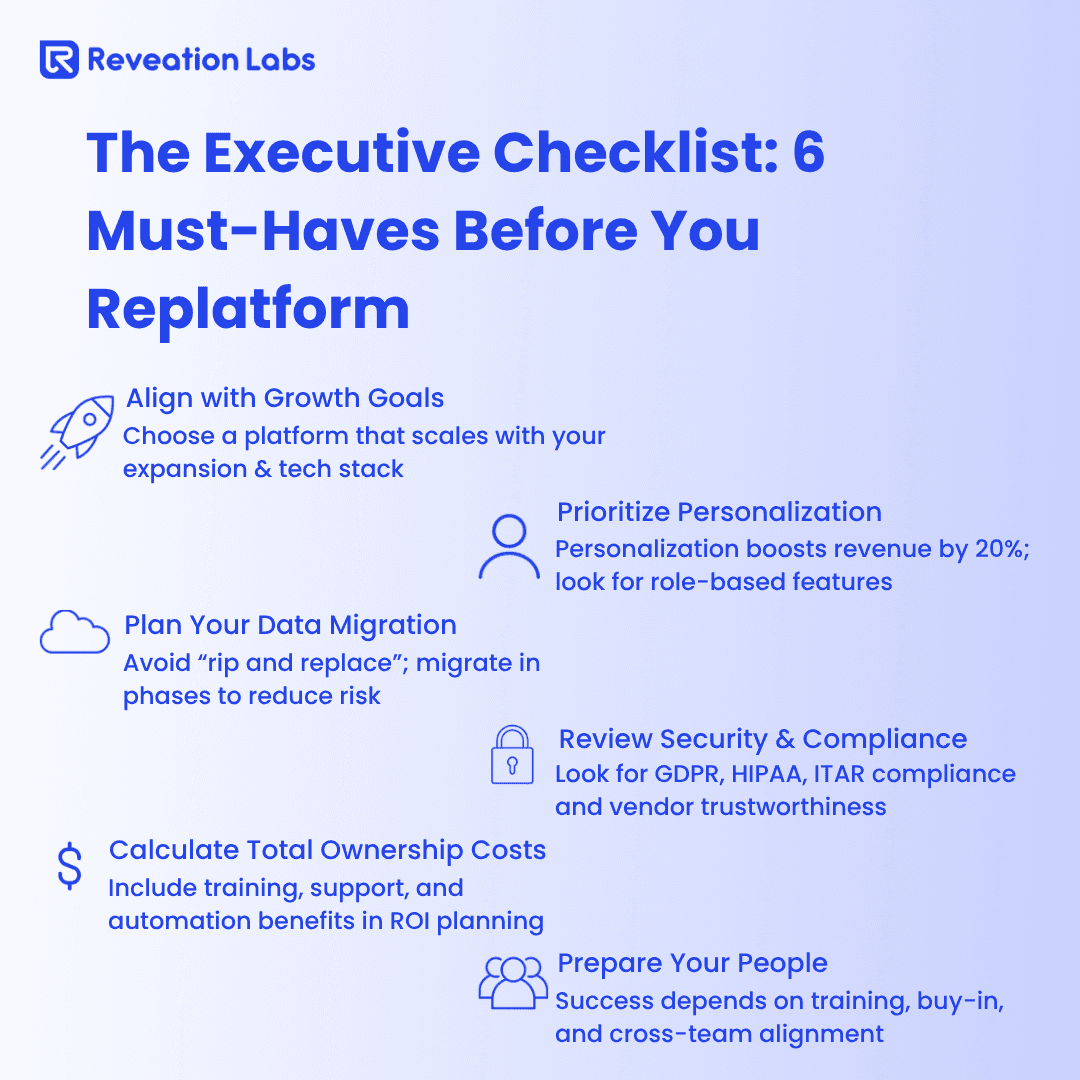
In 2026, replatforming is not just about replacing legacy software. It is about building a stronger operating model for growth, self-service, data accuracy, and long-term adaptability.
The strongest executive teams begin with business goals, choose platforms based on workflow fit and integration reality, reduce migration risk early, and treat security, AI readiness, total cost of ownership, and adoption as core decision criteria. That is how a platform project turns into measurable business value.
If your team is narrowing options, a good next step is to define which architecture, workflows, and customer journeys matter most before committing to a build. Our article on replatforming solutions for B2B growth is a strong follow-on read.