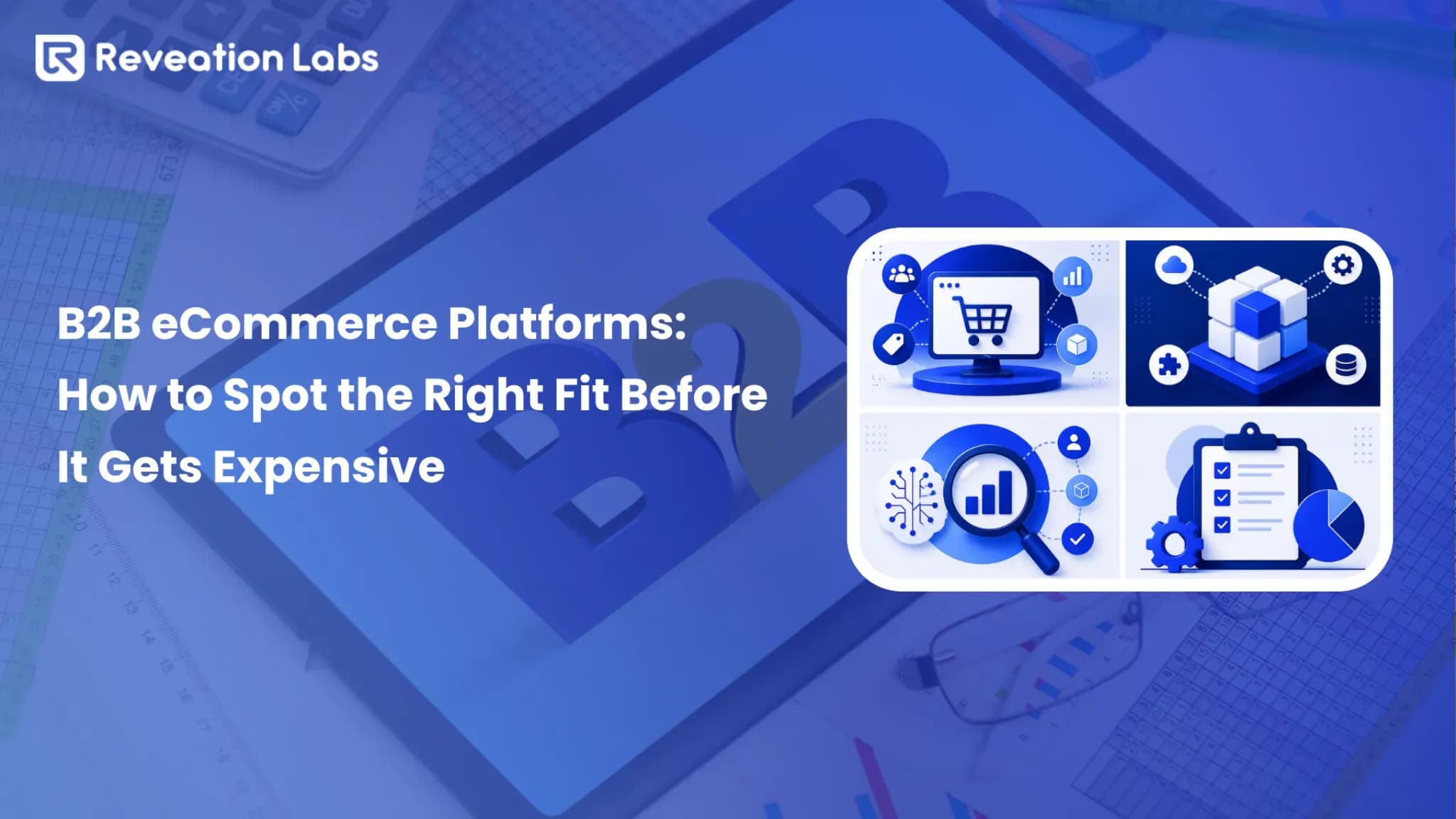

Choosing the right B2B eCommerce platforms does not just impact your website. It defines how your business handles pricing, workflows, integrations, and long-term scalability.
We see teams invest months in evaluation, only to realize later that their platform cannot support the way they actually sell. That leads to costly workarounds, delays, and missed growth opportunities.
B2B buying has changed. Your customers expect fast, self-service experiences with accurate pricing and seamless reordering. They rely on AI-assisted research, which means your platform must support structured data and discoverability.
To help you evaluate options effectively, we built our B2B platform comparison framework, and it's free, so you can assess platforms based on real workflows rather than vendor messaging.
What the right platform enables
Better pricing control, smoother workflows, stronger integrations, and scalable growth.
What the wrong platform causes
Costly workarounds, delays, missed growth opportunities, and long-term friction.
Why platform choice got harder
B2B buyers now research independently before engaging with your sales team. They expect immediate access to information, personalized recommendations, and frictionless purchasing experiences.
At the same time, AI is changing how products are discovered and evaluated. This means your platform must support structured data, consistent content, and integration across systems.
What this shift really means
- Customers expect self-service across the entire journey
- Product and pricing data must be structured for AI-driven discovery
- Content must be consistent and machine-readable
- Systems must support continuous updates and integrations
Your platform is no longer just a storefront. It becomes the infrastructure that supports both buyers and AI-driven interactions.
What must work from day one
Many organizations underestimate how different B2B needs are from standard eCommerce. Adapting generic platforms often leads to long-term inefficiencies.
Core capabilities that matter most
- Account-based pricing and customer-specific catalogs
- Quote management and approval workflows
- Bulk ordering and repeat purchase functionality
- Multi-user accounts with permissions
- Contract pricing and negotiated terms
If you need these capabilities across customer portals, account-based buying, and self-service workflows, our B2B eCommerce and customer portal solutions can help define what should live in the platform and what should connect through ERP, PIM, CMS, or other systems.
Where most projects quietly fail
⚠️ Integration is the real test
Integration is where most platform decisions fail. From what we see in real projects, this is the most underestimated factor.
- ERP alignment through our ERP integration approach
- Scalable data through our integration services
- Content-driven buying via our CMS integration approach
If you are evaluating platforms, this is where most shortlists break down. Using our comparison framework helps you identify these gaps early.
A smarter way to evaluate
A structured evaluation approach helps you avoid poor decisions and focus on what matters.
Business model fit
Manufacturers, distributors, and wholesalers have different requirements. Your platform must align with your core workflows.
Architecture fit
Choose between all-in-one, composable, or headless based on your flexibility needs and internal capabilities.
AI readiness
Evaluate structured data, APIs, and search capabilities. AI readiness depends on your data and architecture.
Operational fit
Implementation approach impacts risk and timelines. Compare options in our big bang vs phased migration guide.
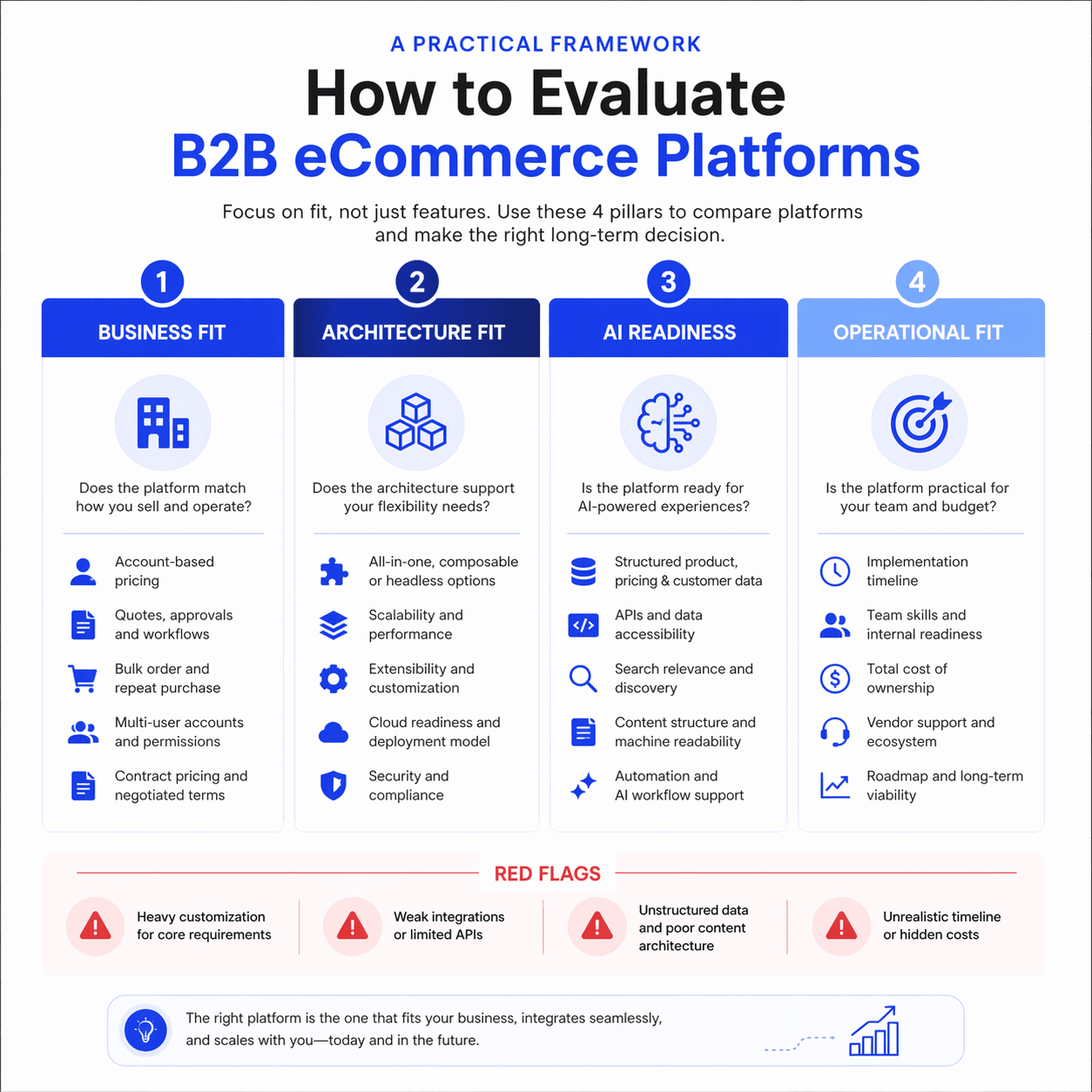
The checklist teams often miss
| Criterion | What to Test | Red Flags |
|---|---|---|
| Business Fit | Workflow alignment | Heavy customization needed |
| Architecture | Flexibility | Rigid system |
| AI Readiness | Data structure | Unstructured data |
| Operational Fit | Cost and timeline | Unrealistic effort |
How to narrow options faster
This is where most teams struggle. Too many options and not enough clarity.
- Define non-negotiables
- Eliminate poor-fit platforms early
- Score platforms against real workflows
- Validate integrations
- Align with internal capabilities
You can use our comparison tool to simplify this process and evaluate platforms consistently.
The final filter before choosing
The right decision comes from structured evaluation, not feature comparison. Focus on fit, integration, and long-term scalability.
If you are evaluating B2B eCommerce platforms, start with our platform comparison framework to move forward with clarity.
Ready to compare with clarity?
Start with our platform comparison framework and assess your options based on real workflows, integrations, and long-term fit.
Explore the Comparison Framework →
Focusing on demos and ignoring integrations are the most common mistakes.