Introduction
B2B eCommerce solutions are online platforms that let businesses buy from and sell to each other, essentially turning a corporate website into a self-service sales portal. A good solution ensures customers have “seamless access to information, purchasing options, and business engagement.”
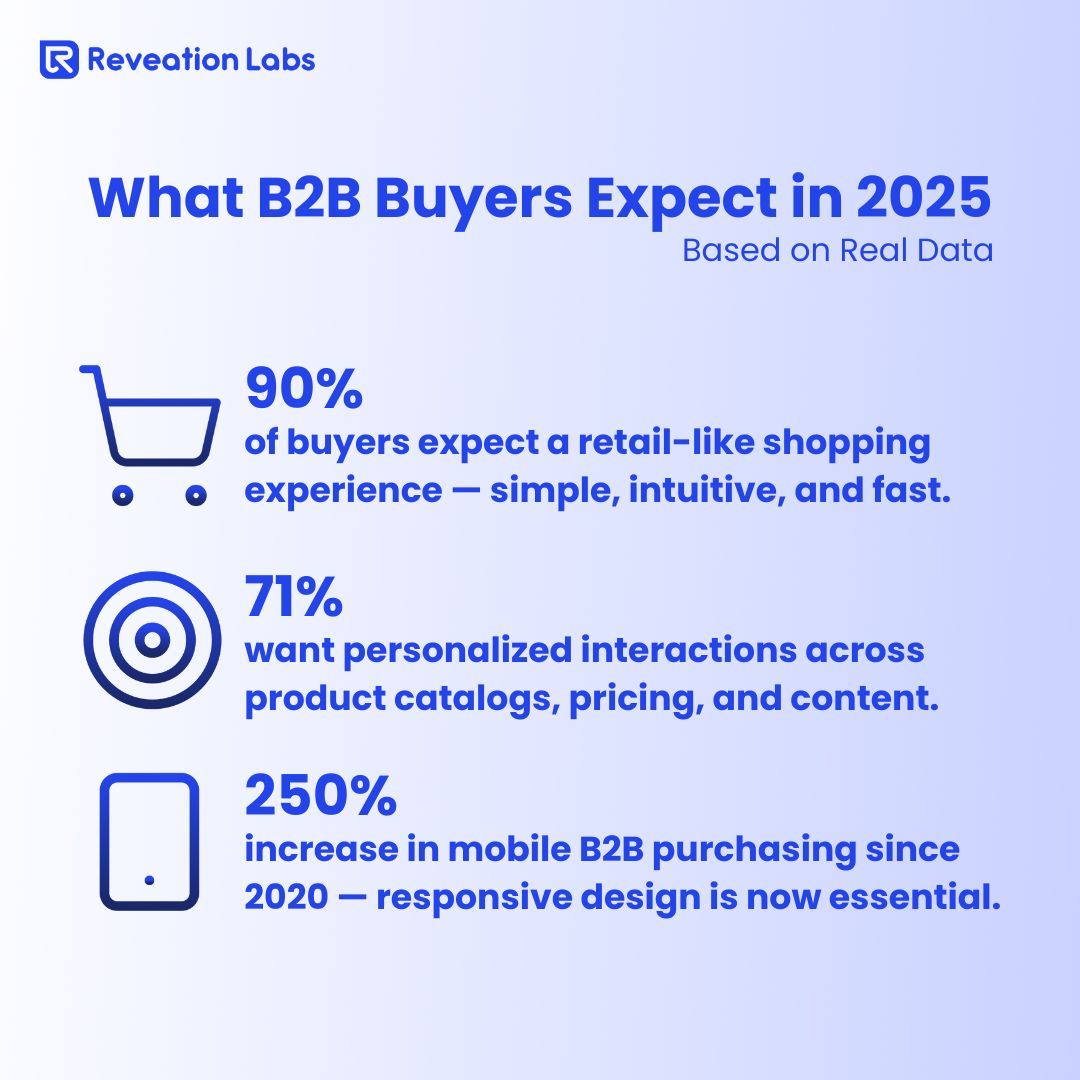
In 2025, this is critical: modern B2B buyers expect Amazon‑like convenience, highlighting the essential digital commerce solutions B2B capabilities 2025 demands. Research shows 71% of B2B buyers expect personalized interactions, and 90% expect a retail-like (B2C) shopping experience. Distributors, wholesalers, and manufacturers must meet these demands. Let’s look at the features to look for (like those built into Shopify Plus’s native wholesale solution) and how to evaluate platforms.
We’ll cover core B2B features, types of systems (from SaaS to headless), and new factors for 2025, all with an eye toward practical, real-world implementation. We’ll also talk about how working with a specialized partner can ensure your chosen solution fits your industry and growth goals.
Core Capabilities of a B2B eCommerce Solution
Modern B2B buying involves custom workflows and large orders. A B2B platform should support features like these:
Custom Pricing & Tiered Discounts: You need to set different prices for different customers or volumes. For example, Shopify Plus’s B2B tools let you create custom price lists and volume‐based tiers per account. Pimberly notes that “customized pricing is an essential requirement” of robust custom B2B eCommerce solutions.
Company Accounts with Roles & Permissions: Instead of one login per person, B2B sites create organization accounts. Each company account can have multiple users with distinct roles (buyer, approver, admin). For instance, Shopify calls these “company profiles,” letting you attach multiple contacts and permissions to one account.
- Bulk Ordering & Quick Reordering: B2B orders are often large and recurring. The platform should let customers upload a CSV/order sheet, use “quick order” SKU lists, and easily reorder past items. It should also automatically apply any quantity discounts.
- Integration with ERP, PIM, CRM, WMS: Real-time data sync is vital. A robust B2B solution hooks into your back office (ERP for pricing/inventory, PIM for product data, CRM for customer info, WMS for fulfillment). For example, Pimberly highlights platforms that “integrate smoothly with CRM systems, inventory management, order management, warehousing, and other essential operations”.
- Contract-Based Catalogs or Buyer-Specific Views: You should be able to show different catalogs or product lines to different clients. A builder/distributor might have one product line for retail customers and a separate set of items for contractors. A B2B platform lets you hide or expose SKUs per account (“customer-specific catalogs”). Shopify Plus, for example, lets you limit product visibility based on the logged-in company.
- Multi-Location Fulfillment & Order Tracking: Many distributors ship from multiple warehouses. The eCommerce system should handle orders with split shipments, showing consolidated order status. Shopify Plus supports one company placing orders across multiple locations.
These B2B features contrast sharply with retail (B2C) sites. In B2C, the same price applies to everyone, and purchases are usually one person with a credit card. In B2B, pricing is often negotiated or contract-driven, multiple approvers may review an order, and payment terms can vary.
For example, net terms (30/60/90‑day invoices) or purchase orders replace the “Pay Now” model of retail. Lastly, remember mobile access: business buyers and field reps increasingly shop on phones or tablets.
In fact, McKinsey found a 250% surge in B2B mobile ordering during 2020–2022. So any B2B site must be fully responsive (or offer an app) so users can browse and order on the go.
Types of B2B Platforms
When choosing a platform, consider your team’s needs and skills. There are three main approaches:
Out-of-the-box (SaaS) Platforms
- These are turnkey solutions with built-in B2B features. Examples include Shopify Plus (with its Wholesale Channel) and BigCommerce B2B. They often launch quickly and require little custom development.
- For instance, Shopify Plus’s native B2B solution (exclusive to Plus plans) lets you manage wholesale and retail on one storefront, complete with company accounts, custom price lists, and payment terms, without extra apps or separate sites.
- The upside is speed and stability: your IT work is mostly configuration, not coding. The downside is that you work within the platform’s constraints; very unique workflows may need third-party add-ons or custom coding.
Composable/Headless Platforms
- These systems use a modular, API-driven architecture. Popular examples are Virto Commerce and OroCommerce. In a headless setup, you might use a best-of-breed front-end (e.g., a React or Next.js storefront) talking to back-end services via APIs.
- This is highly flexible: as BigCommerce explains, “MACH” architectures (Microservices, API-first, Cloud-native, Headless) let you customize each component and easily add new modules.
- For example, your front-end search widget, product catalog service, checkout engine, etc., can each be swapped or scaled independently. Integration is also easier through headless platforms, easily connect to ERPs, CRMs, PIMs, and other business tools”.
- The trade-off is complexity: you need a capable development team (or partner like Reveation Labs) to build and maintain it. If you have advanced needs (multiple brands, localization, unique UI, heavy data integrations) and tech staff, a headless solution offers maximum control and future-proofing, characteristic of customized B2B eCommerce solutions.
Custom-built Platforms
- Some companies choose to build their commerce system from scratch. This can theoretically cover any requirement. In practice, it means a long (and expensive) build, plus ongoing maintenance of a unique codebase.
- We generally recommend custom-only when needs are truly one-of-a-kind and no packaged solution can fit. Otherwise, consider headless commerce first.
- If a custom route is taken, be mindful: monolithic custom sites may launch faster (since they start with a single build), but often incur high long-term costs as requirements change.
In all cases, integration-readiness and IT comfort are key decision factors. A SaaS platform like Shopify Plus can handle common ERP/PIM integrations via apps or built-in connectors, which is great for teams with limited developers. A headless approach demands more developer resources but pays off if you need deep custom connections.
BigCommerce notes, a composable architecture (headless) gives high flexibility and seamless integration with business systems. Choose the path that matches your roadmap and in-house skills – and remember that specialized partners (e.g., Reveation Labs) can help bridge gaps if your team is smaller.
2025 Checklist When Choosing a B2B eCommerce Platform
In 2025, the bar is even higher. As you evaluate platforms, ask, “Will this solution meet not only today’s needs but tomorrow’s?” Such as:
Future Flexibility
- Can the system grow with you? If you add new product lines, launch in other countries, or acquire another business, the platform should scale.
- For example, a MACH/composable platform lets you plug in new services (like a new catalog or checkout) without overhauling the site.
- You should be able to support more channels (distributor portals, mobile apps) and regional sites easily. If your current site is monolithic or on-premise, it may be hard to adapt later – 90% of B2B buyers now expect a modern, flexible experience.
AI Readiness
AI and machine learning are not just buzzwords – they power personalization and efficiency.
In 2025, your eCommerce engine should support AI-driven search, product recommendations, and content. Forrester finds 66% of B2B buyers expect personalized content online.
Look for features like AI product feeds, personalized catalogs, or chatbots.
Even simple predictive search or automated merchandising tools (examples: Klevu, Bloomreach) can sharply improve the buyer journey.
Marketplace & Omnichannel Expansion
- Today’s B2B buyers often discover products on Amazon Business, Alibaba, or industry-specific marketplaces. Many start research on these platforms.
- Ask: Can the platform push your catalog to third-party channels? Can it handle bulk orders from a marketplace and sync inventory? Enabling marketplace selling (even internally to dealers) can unlock new revenue.
- Platforms that integrate easily with feed-management tools or offer native marketplace connectors will give you an edge.
Compliance & Security
- Industry regulations matter. If you’re in pharmaceuticals, aerospace, or any regulated sector, your platform must enforce compliance rules.
- For example, a pharma distributor must restrict prescription product catalogs to licensed customers and track serial numbers. Look for features like secure login gates, role-based catalog access, and integration hooks for external licensing or quality systems.
- Data security (SSL, SOC 2, etc.) and GDPR/PCI compliance are table stakes, but consider industry needs too (like FDA, REACH, or ITAR).
Speed of Deployment & Total Cost of Ownership (TCO)
- Finally, consider how quickly you can launch and the long-run costs. SaaS platforms (Shopify Plus, etc.) often offer fast setup and predictable subscription pricing, letting you go live in months. A headless or custom build may take longer and cost more initially. Weigh that against future savings.
- Forrester-style analysis suggests doing a thorough TCO review – include licensing fees, implementation, integration work, and maintenance.
- A modular (headless) solution may require higher upfront investment but often yields lower costs over time through flexibility. In contrast, a cheap legacy system might save money today but cost more to upgrade later.
Table: Traditional 2024 B2B sites vs. expected 2025 platform capabilities.
Questions to Ask Before You Invest
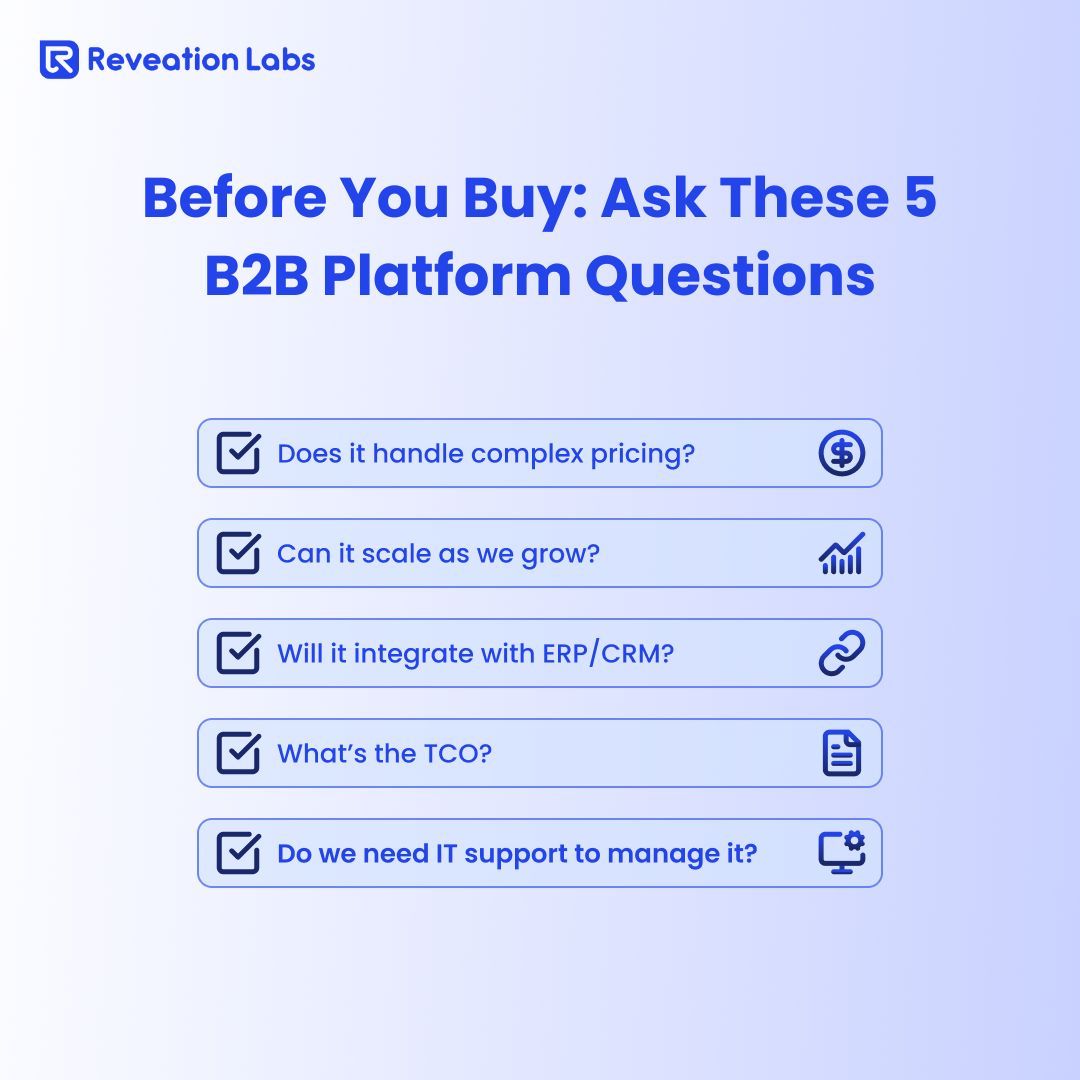
Before signing on the dotted line, use this quick checklist:
- Can it handle complex pricing and approvals? Ensure the solution supports your contract pricing, volume discounts, and multi-stage approval workflows at checkout.
- Will it integrate with our ERP/PIM and other systems? Check that live data sync (or easy connectors) exist, so you don’t have manual exports.
- Is it flexible for future growth? If you add new products, brands, or acquire another company, can the site adapt? Can you spin up new catalogs or stores quickly?
- How easy is content and catalog management? Consider who updates product info. Does the platform have a user-friendly CMS or PIM integration so your team can keep prices, specs, and promotions up to date without coding?
- What are the deployment timeline and total costs? Clarify implementation time, license fees, hosting, and ongoing maintenance. (A free audit or proof-of-concept can reveal hidden costs.)
Use these questions to vet vendors, test platform demos, and align with your IT and business teams. Even if a platform “ticks all boxes,” remember that execution matters: good partners and clear requirements are what make a project succeed.
Reveation Labs delivers B2B eCommerce consulting that powers smarter, faster growth.
Conclusion
Choosing the right B2B eCommerce platform is a strategic decision for distributors and manufacturers. The ideal solution lets you automate operations and delight buyers, whether it’s Shopify Plus’s built-in wholesale features or a custom headless storefront. Working with an experienced partner ensures a smooth implementation.
Reveation Labs specializes in Shopify Plus and composable B2B sites for distribution and manufacturing. Our team can tailor the technology to your industry’s requirements and help you get online faster. Not sure where to start? Get a free eCommerce platform audit tailored to your industry and growth goals.