
Introduction: Why Shopify’s Value Matters Today
Many businesses feel stuck on platforms that were built for another time. Pages load slowly. Checkout breaks when traffic spikes. Simple updates turn into long projects.
Teams spend hours putting out fires instead of focusing on growth. These issues drain energy and budget, and they make it hard to keep customers happy.
Shopify Plus changes this story. It acts as a growth enabler with three simple ideas at the core. Be quick and flexible. Work with confidence. Find new ways to do things that will work in the future.
These are the Shopify Value Pillars. They help brands sell more, run leaner, and expand into new markets with less effort and more control.
Next week, on Aug 29, we are hosting a webinar that goes deeper into these strategies.
We will share practical examples, show how teams applied the Shopify Value Pillars in real situations, and walk through how to use Shopify B2B ecommerce solutions to grow faster with fewer roadblocks.
Save the date if scaling with clarity and control is a priority.
Speed & Agility: Accelerating Revenue Growth
Challenge: Lost sales, poor conversions, high acquisition costs.
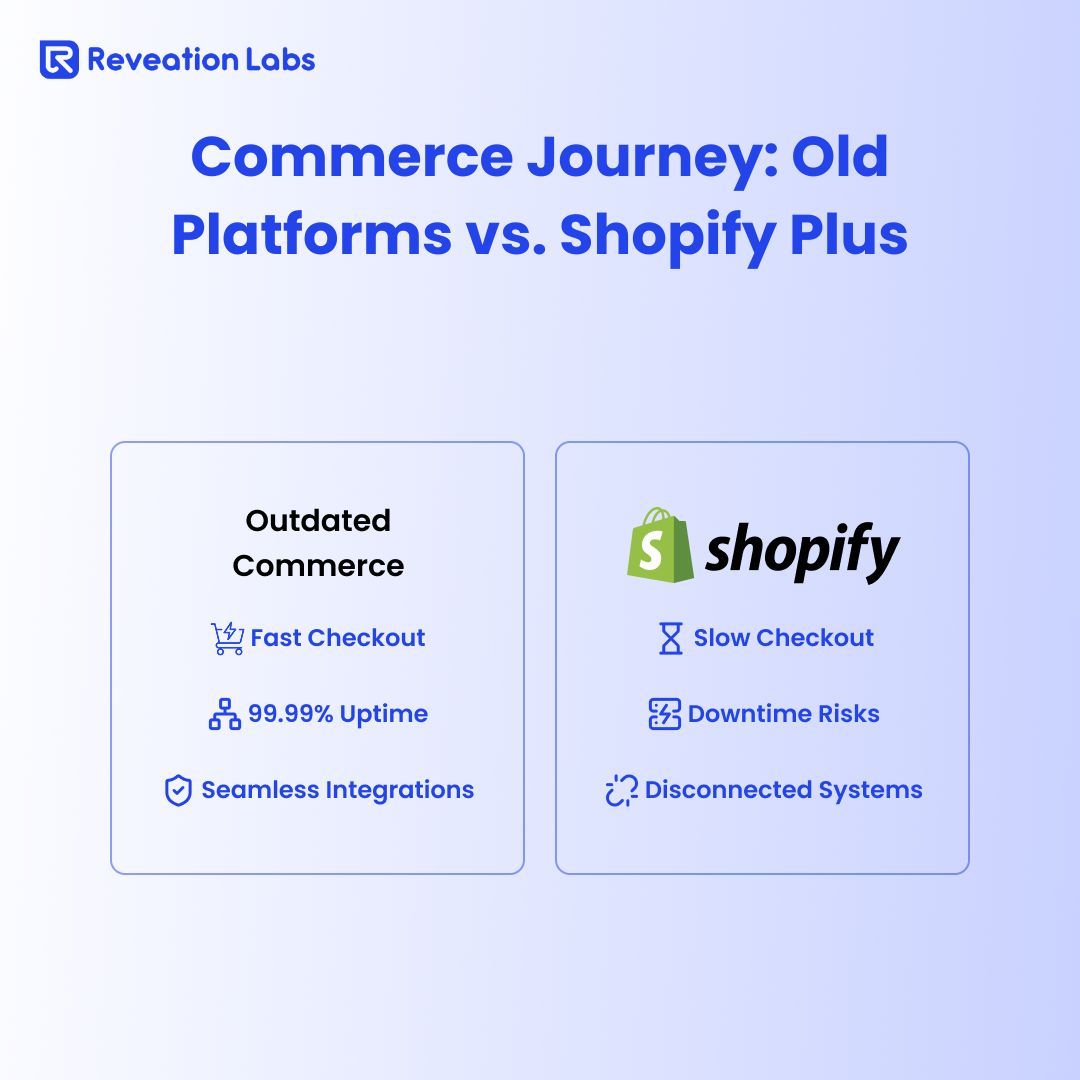
Speed wins. When a storefront is slow or confusing, customers leave. When checkout is clunky, carts get abandoned.
When paid traffic costs go up, growth stalls. These problems are common, but they are not fixed with guesswork. They are fixed with a platform built for speed and guided by data.
Shopify’s Edge
- Checkout that converts: Fast, trusted, and simple, lifting conversions by up to 36%. Fewer steps. Fewer drops. More orders.
- Smarter analytics: Clear insights let you save money, back winners, and get new customers for less money.
- Seamless omnichannel: Social, store, and online stay in sync. Inventory, pricing, and orders match, so the experience feels smooth everywhere.
What this looks like in practice
- A brand can speed up website loading by using native features instead of heavy bespoke coding and making its theme simpler. The bounce rate goes down. Time on site rises. Ads perform better without extra spend.
- A growth team trims wasted budget by using analytics to find high-intent segments and remove weak placements. Cost per acquisition drops while sales stay steady or grow.
- A retail launch syncs with the online store, so shoppers who tried a product in person can buy online with the same offers, accurate stock, and saved profiles.
We’ll be unpacking real case examples of speed-driven growth in our webinar. You can follow those clear steps and templates you can apply them the same day.
Operate with Confidence: Reliability & Cost Efficiency
Challenge: High platform costs, poor uptime, and unscalable systems.
When systems fail during peak demand, the cost is more than lost sales. It is lost trust.
When budgets are spread across many tools and plugins, costs stack up and are hard to predict. When teams rely on fragile builds, every update feels risky.
Shopify’s Edge
- Enterprise storefront reliability: Stores stay online and fast during key moments such as seasonal spikes, big product drops, and influencer campaigns.
- Commerce-first operating system: Inventory, orders, payments, taxes, and fulfillment work together. Teams spend less time troubleshooting and more time building.
- Security and uptime: Strong standards and frequent monitoring keep payment information and customer data safe, so executives can focus on growth instead of risk.
- Reduced total cost of ownership: Fewer custom workarounds. Fewer tools to glue together. Fewer emergencies. Predictable costs and a stable core free up budget for strategy and brand.
What this looks like in practice
- A fast-growing brand moves from a patchwork of plugins to native features and well-supported apps. Maintenance drops. Release cycles speed up.
- A finance team models TCO and finds savings in hosting, middleware, and custom maintenance. Those funds shift to creative testing and new channels.
- A support team gets fewer tickets about checkout, shipping, and logging into an account.
Join the webinar to hear how leading brands are scaling with confidence on Shopify. We will show the exact shifts that drove savings and stability.
Many enterprises use B2B eCommerce consulting to align Shopify Plus capabilities—like automation, scalability, and personalization—with their long-term business goals.
Innovation You Can Customize: Built for the Future
Challenge: Disconnected systems, international complexity, and limited integrations.
Growth brings complexity. New markets, new teams, new channels, and new partners all add layers. If the underlying platform can't change, new ideas come to a halt.
When integrations are weak, data breaks. If localization is done by hand, it takes a long time and costs a lot of money to expand globally.
Shopify’s Edge
- Seamless integrations with open APIs: Link ERPs, PIMs, CRMs, CDPs, and more without having to develop a lot of heavy code. Keep data clean and accessible across the stack.
- Global growth enablement and localization tools: Local currencies, languages, tax rules, and duties support international selling. Teams launch faster with fewer custom projects.
- Flexible customization with Shopify: Use strong theming, custom apps, and workflows to meet unique needs without having to change the core platform.
What this looks like in practice
With Shopify B2B ecommerce solutions, a B2B unit can configure prices, payment terms, draft orders, and quick order lists for each account. On the other hand, the D2C unit keeps its own brand experience on the same core.
A global team makes storefronts that are customized to each country, with content that is relevant to that country, a checkout process that works with several currencies, and legal tax management.
A product team can ship tests faster by just employing bespoke apps when they need to and using native functionalities when they don't. Innovation happens faster and with less risk.
In the webinar, we’ll showcase how Shopify innovations help businesses expand globally, which includes integration patterns that save time and protect data quality.
Real Business Impact: The Shopify Growth Formula
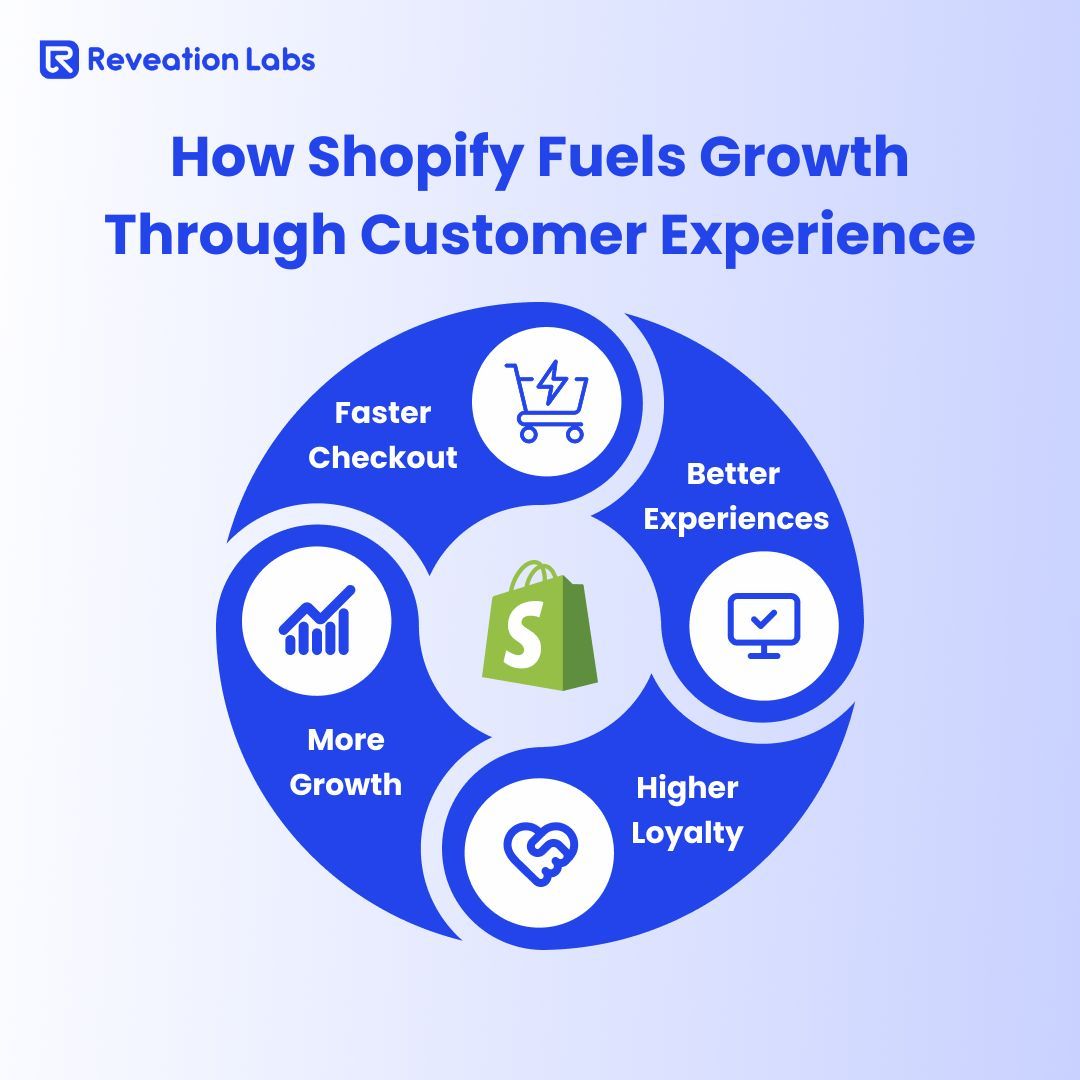
Bringing it all together: speed + confidence + innovation = growth.
The Shopify Value Pillars work best when they work together. Speed and adaptability lift conversions. Reliable operations protect revenue and cut waste.
Smart, custom innovation opens doors to new markets and customer groups. Put them together, and you get a clear path to steady, long-term growth.
Case-style highlights
Topline revenue growth: Spend smarter, speed up your site, and make checkout effortless. Sales go up without inflating costs.
Better customer experience: Make sure that everything is the same online, in-store, and on social media. When things run smoothly, customers always receive what they want.
Easy global expansion: Use localization, proper tax handling, and synced inventory to launch new regions smoothly and with confidence.
B2B and D2C on one platform
Many brands run both models together. Shopify's B2B ecommerce solutions help with managing accounts, purchase orders, and net terms. D2C stores, on the other hand, are all about brand and lifestyle. Teams can share technology and data while still meeting their own needs.
Also Read: B2B eCommerce for Manufacturing
How to apply this in the next 90 days
- Audit the funnel: Page speed, navigation, search, PDP clarity, and checkout trust signals should be your first priorities.
- Tighten acquisition: Use first-party data to guide targeting, improve creative testing speed, and set clear targets for CPA and MER.
- Reduce TCO: Replace fragile customizations with stable patterns. Consolidate tools where it makes sense. Shift savings to growth bets.
- Prepare for international: Find the best target areas, make sure you know what taxes and duties you need to pay, and design localization that matches local demands.
We’ll walk through examples and answer questions live during the session. Bring current challenges. We will connect them to the Shopify Value Pillars and tell you what to do next.
Conclusion
Growth gets easier when the core is strong. The Shopify Value Pillars give that core a shape that is simple to understand and simple to act on.
If the plan is to move faster, operate with confidence, and build for the future, this is the path.
The next step is to see it in action and put it to work. Join us for the webinar, and let’s make the next quarter the most focused and productive one yet.
This applies to both B2B and D2C. With Shopify B2B ecommerce solutions, wholesale teams can deliver stress-free ordering, account-based pricing, and flexible terms.
With the same core, D2C teams can craft brand-led experiences that convert and retain.
Ready to speed up growth with Shopify? Explore our solutions or grab a spot in our next webinar. We will be discussing with real examples and sharing tips you can use right away. If you’re looking for expert guidance, partnering with a trusted shopify plus development company can give your business the competitive edge it needs to scale smarter and faster.
You’ll see how to apply the Shopify Value Pillars step by step, in a simple way that makes a difference now.