


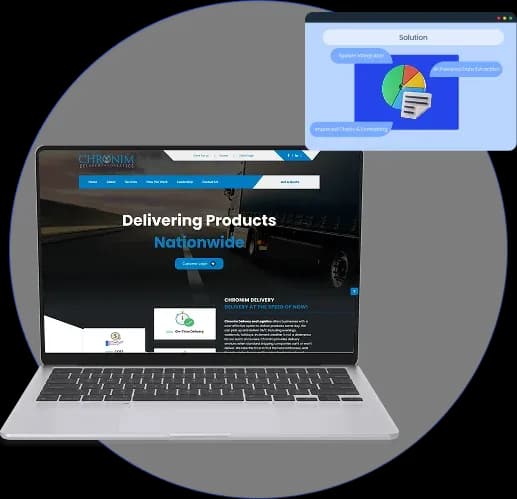
Chronim's old-school reporting systems weren’t just slow—they were silent in the face of rapid data evolution. Decision-makers found themselves waiting for outdated spreadsheets while their competitors raced ahead.
“We knew we had the data,” said one operations lead at Chronim, “but making sense of it was like digging through fog with a flashlight.”
With delivery volumes increasing, their infrastructure groaned under pressure. Reports were delayed, manually processed, and devoid of deep insights. Stakeholders often operated on partial information, with no real-time view of delivery performance, cost fluctuations, or route efficiency. The disconnect between data generation and business decisions had become too wide to ignore.
The need was clear: an ecosystem that could ingest diverse datasets, analyze in real time, visualize at granular and geographic levels, and automate insights into clear actions.


